
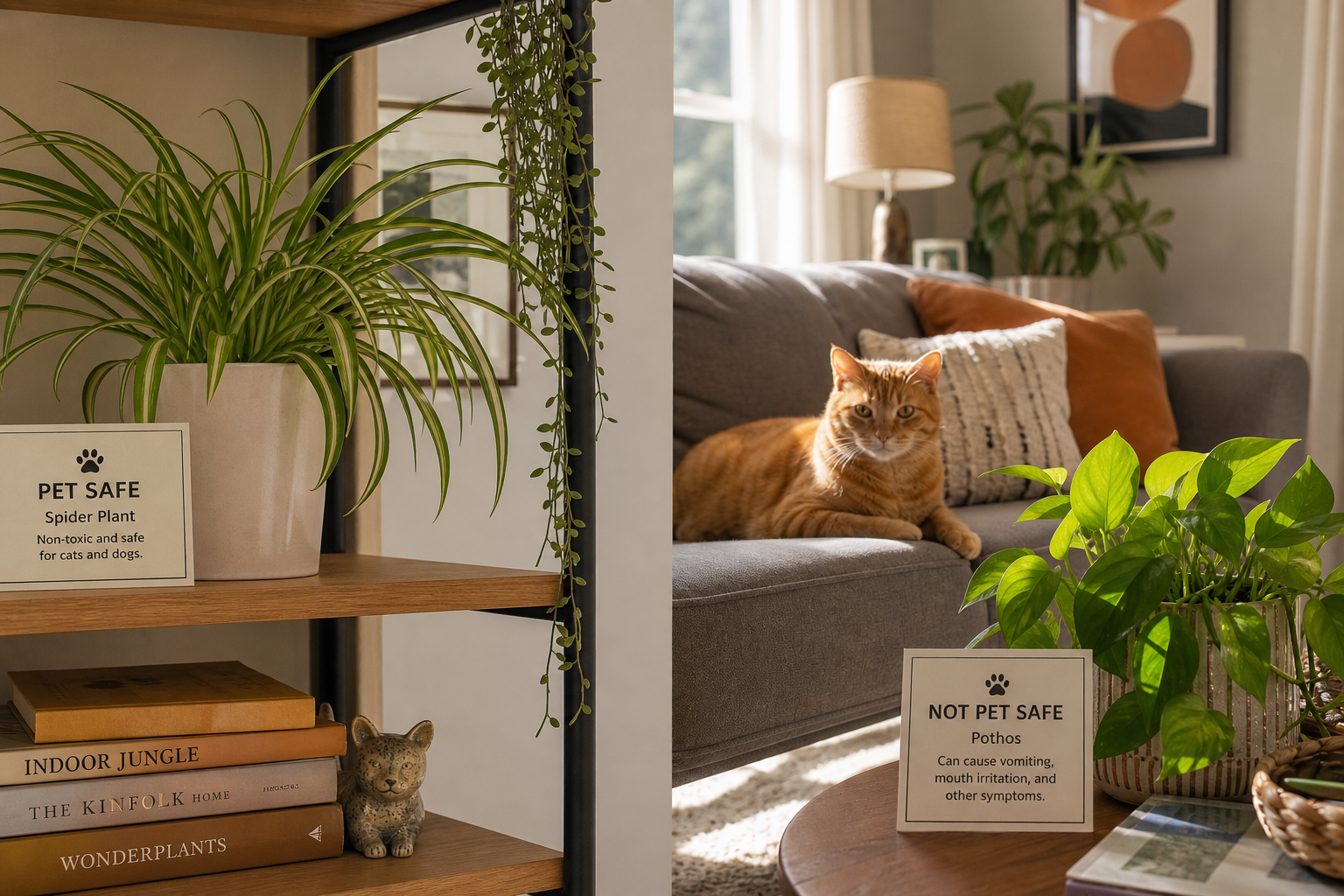
Cats and dogs explore with their mouths. "Pet-friendly home" does not mean every Instagram plant belongs on a coffee table—this guide separates ASPCA-listed safer options from popular toxic species, with placement rules that work in rentals.
Quick Answer
Before buying any plant, search its scientific and common name on the ASPCA list. If it's toxic, place it on a tall shelf, in a hanging planter, or skip it. Safer common choices include spider plant and parlor palm—still not edible, but widely listed as non-toxic to cats and dogs. Toxic apartment staples include pothos, snake plant, ZZ plant, peace lily, and aloe—all common in beginner lists.Pain Point Bridge
You Google "pet safe plants" and get contradictory blog lists—because marketing labels are not toxicology. One chewed leaf can mean an emergency vet visit; the stress is not hypothetical for cat climbers and curious puppies.
We cross-check against ASPCA guidance and show where to put safe species so pretty does not become reachable.
Who This Is For
- Cat climbers who treat shelves like highways
- New plant parents who will not trust "pet friendly" tags alone
- Dog households with puppies who chew everything green
How Toxicity Actually Works
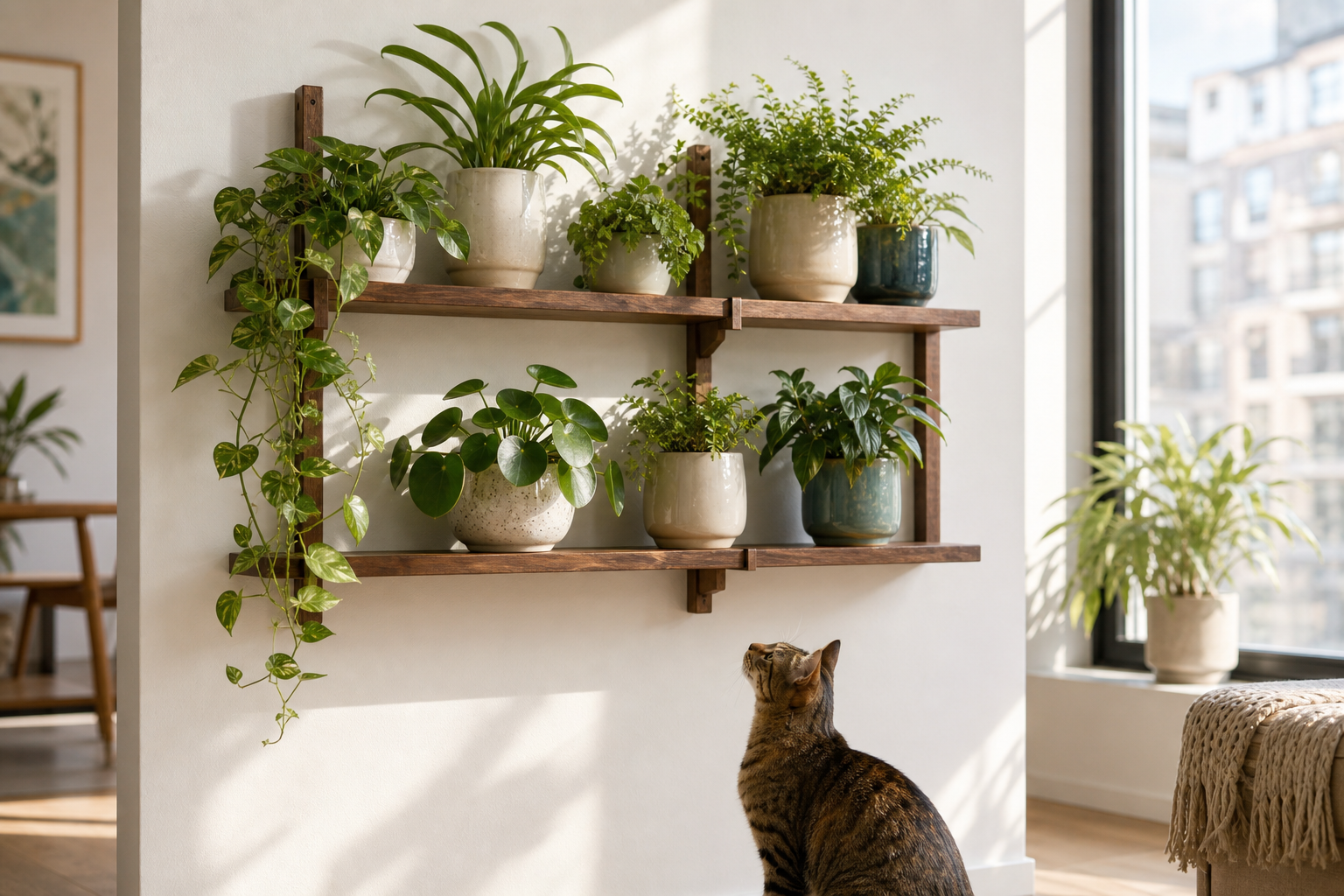
Ingestion—not proximity—drives risk. A toxic plant on a shelf your cat never reaches is different from a trailing pothos at paw height.
Symptoms vary: oral irritation, vomiting, drooling, or worse with large doses. This guide is not veterinary advice. If your pet eats any plant and shows distress, contact your vet or ASPCA Animal Poison Control (fee may apply).
Pet-Safer Choices (Verify on ASPCA)
| Plant | Why people like it | Pet note |
|---|---|---|
| Spider plant | Easy, propagates babies | ASPCA lists non-toxic to cats and dogs |
| Parlor palm | Soft, tropical look | ASPCA lists non-toxic; keep soil off limits |
| Boston fern | Humidity-loving | Often listed safe; needs moisture |
| Calathea / prayer plant | Patterned leaves | Generally listed safe; finicky care |
Products that support safe placement
- Live Spider Plant — Amazon]">Costa Farms Parlor Palm — Amazon]">Elevated planter stand —
Amazon] mt-10 mb-4">Popular Toxic Plants (Common in "Beginner" Lists)
Plant Toxic component Typical symptom if chewed Pothos / philodendron Calcium oxalates Mouth irritation, drooling, vomiting Snake plant Saponins Nausea, vomiting ZZ plant Calcium oxalates Oral irritation Peace lily Calcium oxalates Oral burning, drooling Aloe Anthraquinones Vomiting, lethargy If you already own these, elevate, hang, or rehome—don't rely on bitter sprays alone. See Best Low-Light Plants for toxicity notes on each pick.
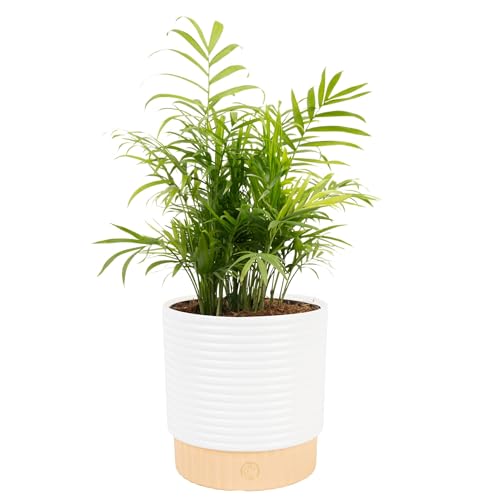
Toxic houseplants on high shelf with cat on floor
Placement Rules for Pet Homes
- Vertical beats horizontal — Hanging planters and tall plant stands beat floor pots.
- Separate cat highways from plant zones — Don't place pots where cats already jump (sofa arm → shelf path).
- Weight stable pots — Top-heavy ceramic on a light stand tips when cats bat leaves.
- Offer grass alternatives — Cat grass on the floor redirects some chewing (not a guarantee).
Step-by-Step: Audit Your Home
- List every plant — Include gifts and "temporary" nursery pots.
- ASPCA lookup each — Save scientific names from plant tags.
- Map pet routes — Where do cats climb in the first 10 seconds after you enter?
- Move or swap — Elevate toxic plants; replace with spider plant or parlor palm at accessible heights.
- Re-check quarterly — New plants arrive; tags get lost.
Common Mistakes
- Trusting "pet friendly" Pinterest boards without ASPCA verification.
- Assuming small bites are harmless — cumulative nibbling matters for small cats.
- Placing toxic trailers at eye level for dogs — wagging tails knock pots; dogs chew fallen leaves.
How We Evaluated
- Matched each recommendation to scenario fit (room size, renter constraints, pet/kid realities)—not spec-sheet winners alone.
- Cross-checked public retailer listings and owner-review themes for recurring complaints (noise, odor, assembly, wash durability).
- Price-checked U.S. listings at time of update; we do not guarantee lowest available price.
- Human editors reviewed AI-assisted drafts; we did not conduct hands-on lab testing unless explicitly stated in the article.
What You'll Walk Away With
- ASPCA-backed safe vs. toxic reference framing
- Floor vs. mounted placement for climbers
- Links to pet-safe buying list
FAQ
Is pothos safe if my cat ignores plants?
Many cats never chew—but climbers and kittens do. Pothos is toxic on ASPCA lists; we recommend hanging or substituting spider plant if the vine must live at pet height.
Are succulents pet-safe?
Many are not. Aloe is toxic. Some haworthia and echeveria appear on safer lists—verify each species individually.
Where can I see a full pet-safe shopping list?
See our dedicated roundup: Best Non-Toxic Indoor Plants Safe for Cats and Dogs and where to put them.
Related Reading
- Best Non-Toxic Indoor Plants Safe for Cats and Dogs
- Best Pet-Safe Indoor Plants and Where to Put Them
- Best Low-Light Indoor Plants for Beginners
AI + Editor Transparency
We used AI tools to draft sections of this article. Human editors verified ASPCA references, safety language, and product links. We do not provide medical or veterinary advice.
For EU readers: This content was created with assistance from artificial intelligence and reviewed by human editors before publication.Affiliate Disclosure
HomeGlean is reader-supported. When you buy through links on our site, we may earn an affiliate commission at no extra cost to you. Learn more about how we test and recommend products.
Last updated: June 1, 2026 · Prices and availability may change.