
Business trips, back-to-back meetings, and "I'll water tomorrow" are how healthy plants become crispy plants. Self-watering systems do not replace light or species choice—but they extend the window between waterings so your schedule, not guilt, sets the pace. We compared four approaches from $8 spikes to countertop smart gardens, for renters who cannot install drip irrigation.
Dek: Four self-watering options for forgetful waterers and frequent travelers, with honest limits on what automation can fix.Pain Point Bridge
Most plant deaths in apartments are inconsistent watering, not mysterious pests. Standard decorative pots without drainage trap water; meanwhile, a dry week in summer kills a peace lily in three days.
Self-watering planters use a reservoir, wick, or spike to move water slowly into soil. They work best for moderate drinkers like pothos and herbs—not succulents that need dry cycles. Below are the setups we recommend after comparing capacity, cleanup, and renter-friendly footprint.
Who This Is For
- Travel-heavy waterers—not succulent collectors
- Reservoir skeptics who forget to flush salts monthly
- Beginners pairing pots with low-light species
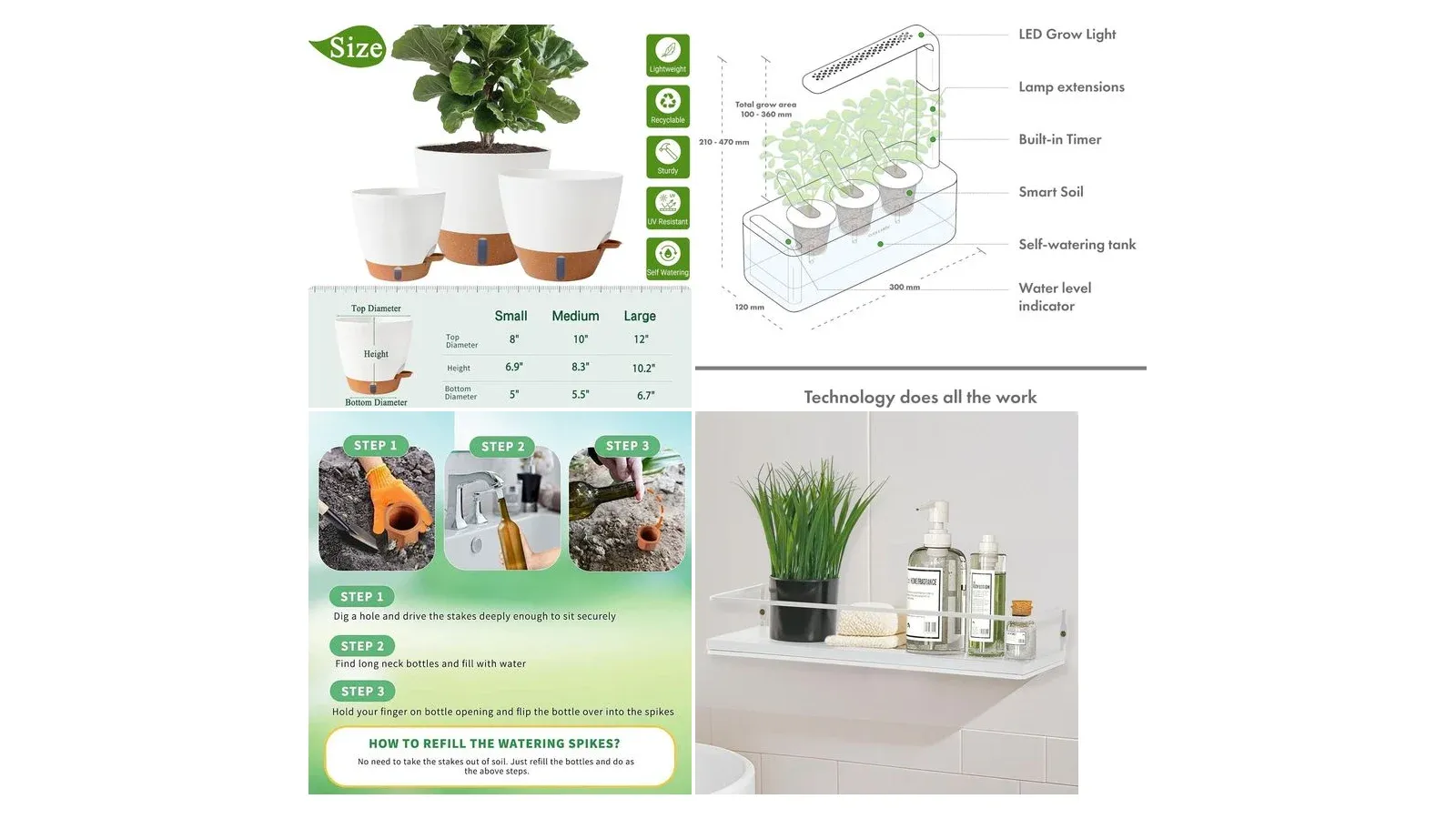
Quick Verdict
| Award | Product | Why it wins |
|---|---|---|
| Best Overall | Mkono Self Watering Planter | Clear reservoir window; ~2-week buffer for medium pots |
| Best for Herbs | Click & Grow Smart Garden 3 | Built-in grow light + automated watering for counters |
| Best Budget | DC Self Watering Spike | Under $15; works with bottles you already own |
| Best Zero-Maintenance Look | IKEA FEJKA Artificial Plant | No water, no light—when live plants are not realistic |
Product Recommendations
Mkono Self Watering Planter — Best Overall

- Cotton wick pulls water from bottom reservoir as soil dries
- Clear side window shows when to refill—no guessing
- Fits common 6–7 in nursery pots; neutral white suits renters
- Plastic aesthetic—not ceramic display quality
- Overfilling reservoir in winter can keep soil too wet for succulents
Click & Grow Smart Garden 3 — Best for Herbs


- Integrated LED grow light compensates for dark kitchens
- Pod system simplifies planting; water tank lasts ~2–3 weeks
- Compact footprint for studio kitchens
- Pod refills add ongoing cost vs a pot and soil
- Premium upfront vs a $15 planter and bulb
DC Self Watering Spike — Best Budget

- Clamps onto standard bottles; drips slowly through terracotta cone
- Cheapest way to extend watering over a long weekend
- Pack of several spikes covers multiple pots
- Bottle weight can tip lightweight pots—use heavy glass or stabilize
- Flow rate varies with bottle size and humidity
IKEA FEJKA Artificial Plant — Best Zero-Maintenance Look

- No water, light, or pest management
- Looks consistent year-round in dark hallways and baths
- Under $10—cheaper than replacing dead live plants quarterly
- Not biophilic "living" greenery; dust collects on leaves
- Not suitable if you specifically want air-humidity or care rituals
Comparison Table
| Mkono Planter | Click & Grow 3 | Watering Spikes | IKEA FEJKA | |
|---|---|---|---|---|
| Type | Wick reservoir | Smart counter garden | Bottle drip | Artificial |
| Trip buffer | ~7–14 days | ~2–3 weeks | ~3–7 days (varies) | N/A |
| Needs light | Yes (live plant) | Built-in LED | Yes | No |
| Setup | Drop-in pot | Pod + fill tank | Spike + bottle | Unbox |
| Best for | Houseplants | Herbs | Budget travel hack | Dark corners |
| Price | $15–$25 | $90–$100 | $8–$15 | $5–$10 |
How We Evaluated
Byline: HomeGlean Editorial Team · Plants & apartment livingWe analyzed manufacturer specs, owner-review themes (mold in reservoirs, wick clogging, pod costs), and typical apartment use cases. We do not run long-term lab grow tests; recommendations reflect scenario fit and published care guidance.
Price-checked: June 1, 2026.How to Choose
- One medium houseplant, occasional travel → Mkono planter.
- Dark kitchen, want herbs → Click & Grow (or a grow light + Mkono).
- Weekend trip, existing pots → Watering spikes + heavy bottle.
- Repeated failures in zero light → FEJKA or relocate live plants to a brighter shelf.
Common Mistakes
- Reservoir planters for succulents — constant wet roots rot cacti.
- Never flushing salts — top-water monthly even on “set and forget” pots.
- Opaque reservoirs you never check — algae blooms smell before plants wilt.
When to Skip Self-Watering
Travel-heavy weeks still need low-light forgiving species. Dark rooms need grow lights before fancy pots.
What You'll Walk Away With
- Which species fail in constant-wet reservoirs
- Monthly top-water flushes to prevent salt buildup
- When grow lights beat fancier pots
FAQ
Will self-watering cause root rot?
It can if the reservoir stays full while soil is already saturated—common in winter or low-light rooms. Refill only when the window shows low water and the top inch of soil feels dry.
How long can I leave plants while traveling?
Expect roughly 7–14 days with a Mkono-style reservoir for moderate drinkers—not a month. Spikes buy a few extra days; Click & Grow often reaches 2–3 weeks for herbs. Have someone check if you're away longer.
Can I use self-watering with plants from PL-1?
Pothos and peace lilies adapt well. Snake plants and ZZ plants prefer dry cycles—use conventional pots with drainage instead.
Related Reading
- Best Low-Light Indoor Plants for Beginners
- Best Grow Lights for Indoor Plants in Dark Apartments
- How to Create a Plant Shelf That Actually Looks Good
AI + Editor Transparency
We used AI tools to draft sections of this article and generate concept visuals where noted. Human editors verified product specs, pricing, and care claims before publication.
For EU readers: This content was created with assistance from artificial intelligence and reviewed by human editors before publication.Affiliate Disclosure
HomeGlean is reader-supported. When you buy through links on our site, we may earn an affiliate commission at no extra cost to you. Learn more about how we test and recommend products.
Last updated: June 1, 2026 · Prices and availability may change.