
Quick Answer
Open windows and run exhaust fans to create cross-ventilation for at least 30 minutes, 2–3 times daily during the first 2–4 weeks after new furniture or paint. Keep humidity moderate (40–50%)—high heat and humidity accelerate off-gassing. Use a HEPA + activated carbon air purifier in the same room if you cannot ventilate (winter, high-rise with limited window opening). Choose low-VOC paint and solid-wood or Greenguard-certified furniture on your next purchase to reduce the cycle from the start.Pain Point Bridge
That "new furniture smell" is not harmless nostalgia—it is off-gassing in a sealed apartment with recirculated HVAC. Renters cannot always vent aggressively or delay move-in, and air purifiers do not erase fresh VOC weeks the way marketing implies.
We focus on ventilation timing, source control, and realistic expectations for laminate, MDF, and paint in small spaces—not fear, but a plan you can run while you still unpack.
Who This Is For
- New-move off-gassing in sealed apartments with recirculated HVAC
- Purifier-first shoppers who need ventilation reality checks
- Laminate and MDF buyers without a garage to air things out
Why VOCs Spike After New Purchases
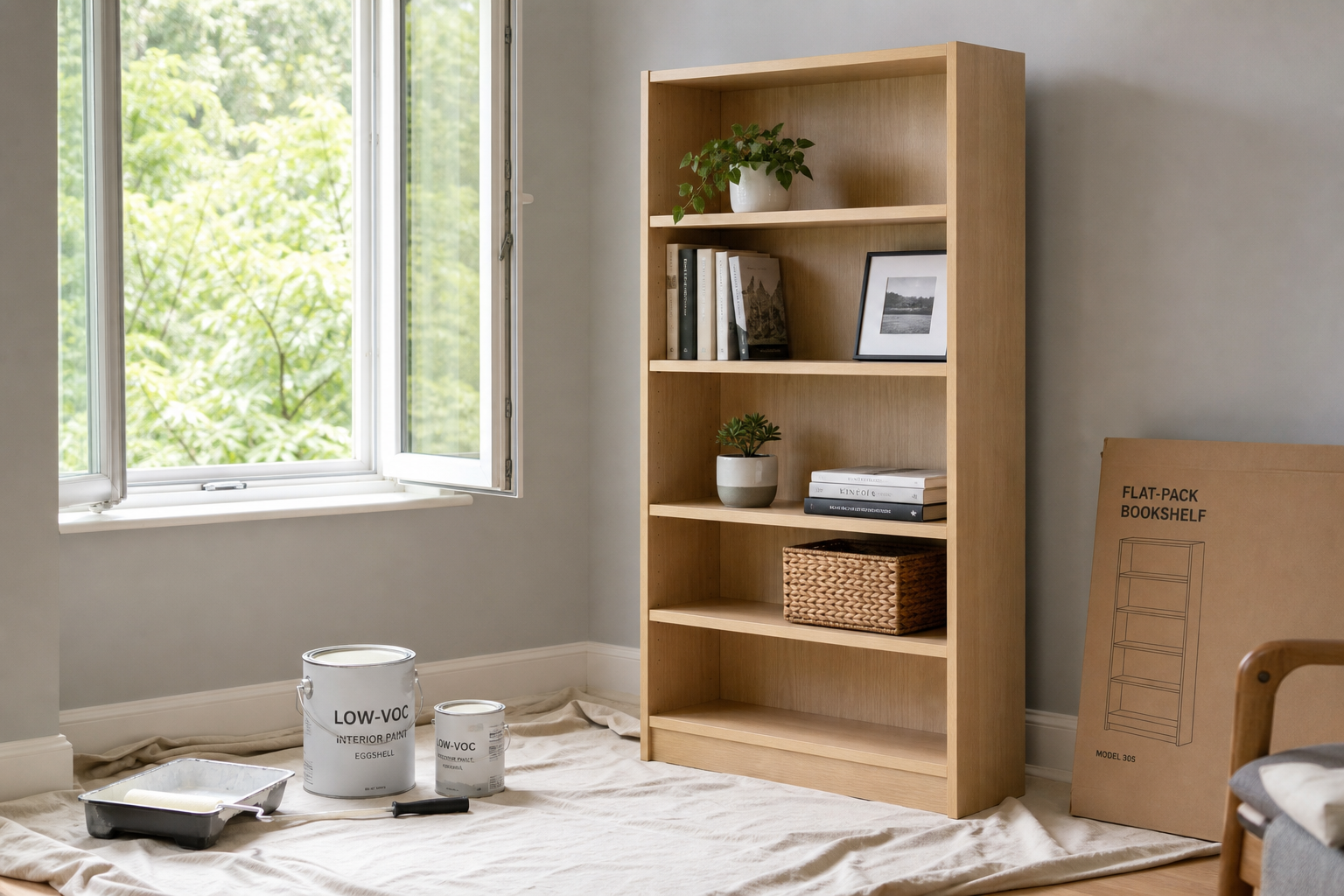
VOCs evaporate from:
- Pressed-wood furniture (particleboard, MDF) using urea-formaldehyde adhesives
- Fresh latex and oil-based paints during curing
- New carpet, foam mattresses, and vinyl flooring
- Flat-pack kits sealed in boxes that trap off-gas until opened indoors
The smell is strongest when products are new and rooms are closed—exactly how many of us assemble furniture with windows shut.
Key Strategies
Ventilation (most effective, lowest cost)
Cross-breeze beats a single cracked window. Open two opposing windows if safe; run kitchen/bath exhaust fans to pull fresh air through.
If unsure: Use a box fan in one window blowing out while fresh air enters elsewhere.
Temperature and humidity control
Heat accelerates off-gassing. Avoid cranking HVAC to max in a room full of new MDF. Target 40–50% RH—see humidifier guidance for winter balance (do not over-humidify).
Source reduction on future buys
- Paint: Low-VOC and zero-VOC labels (still ventilate during application).
- Furniture: Solid wood, metal, or Greenguard Gold certified items when budget allows.
- Unpack outdoors: Let flat-pack panels air in garage or balcony before assembly when possible.
Air purification (supplement, not substitute)
HEPA captures particles; activated carbon filters adsorb some VOC molecules. Purifiers help when windows stay closed—they do not replace ventilation.
Passive absorbers (limited role)
Bamboo charcoal bags absorb odors and some VOCs in small enclosed spaces—closets, drawers, cars—not whole living rooms at meaningful scale.
Recommended Products
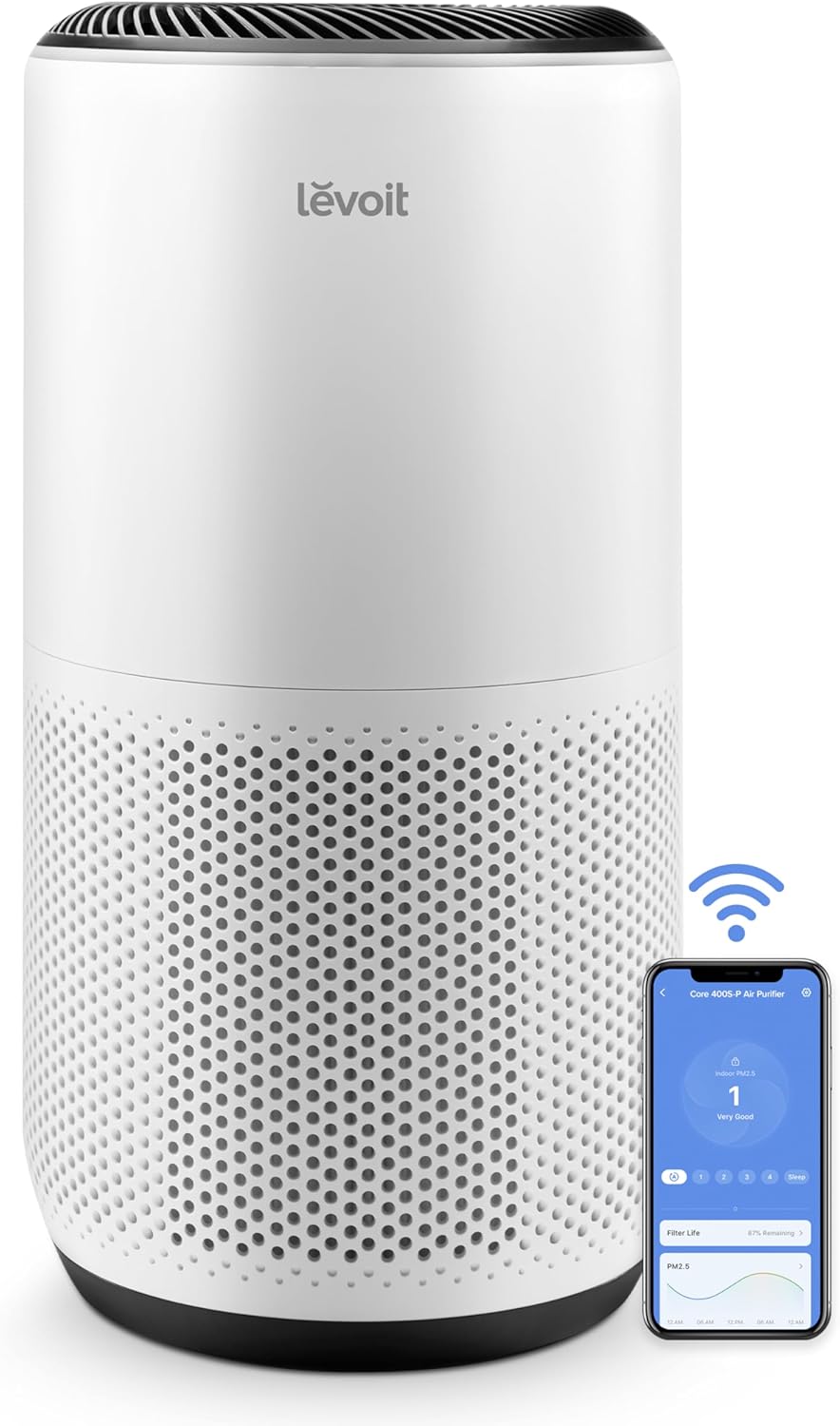
Levoit Core 400S — HEPA + carbon for furnished rooms

- True HEPA plus activated carbon layer
- Sized for bedrooms and living areas during off-gas period
- App scheduling for daytime high, nighttime low
- Carbon saturates—replace combo filters on schedule
- Cannot remove all VOC types at high concentrations
Activated Charcoal Bags 12-Pack — Closets and drawers
Pros- Inexpensive passive option for small enclosed spaces
- Recharge in sunlight per manufacturer instructions
- Negligible impact in open rooms with active off-gassing
- Must replace or recharge when saturated
ECOS Joyful Semi Gloss Paint — Low-VOC for next project

- Zero-VOC formulation marketed for sensitive occupants
- Suitable for trim and walls when repainting to seal old surfaces
- Still requires ventilation during application and cure
- Premium price vs. standard latex
CLEVAST Bamboo Charcoal Air Purifying Bags — Budget passive option

- Low-cost trial for drawers and small nursery closets
- No electricity
- Same scale limits as other charcoal bags
Step-by-Step Off-Gassing Protocol
| Phase | Action | Duration |
|---|---|---|
| Week 1 | Cross-ventilate 2–3× daily; purifier on high when windows closed | Days 1–7 |
| Week 2–4 | Continue ventilation; charcoal in drawers; avoid sleeping in room if odor strong | Days 8–28 |
| Month 2+ | Odor should fade; maintain normal cleaning; replace carbon filter if purifier used heavily | Ongoing |
| Next purchase | Choose low-VOC paint and certified furniture | Future projects |

Common Mistakes
- Relying on candles or heavy fragrance — Masks odor without removing VOCs; adds more chemicals.
- Sealing room with new MDF wardrobe inside — Traps off-gas; ventilate before and after assembly.
- Expecting plants alone to fix VOCs — Plants help marginally; ventilation and source control matter more.
- Ignoring carbon filter replacement — Saturated carbon stops adsorbing; smells return.
How We Evaluated
Byline: HomeGlean Editorial Team · Non-toxic homeHomeGlean uses AI-assisted research to analyze public product information, user-review patterns, and scenario fit. Every article is reviewed by a human editor before publication. We do not conduct hands-on product testing unless explicitly stated.
We referenced EPA indoor air guidance on ventilation and VOC sources, manufacturer low-VOC claims, and realistic expectations for passive absorbers. Prices checked June 1, 2026.
What You'll Walk Away With
- Ventilation timing realistic for sealed apartments
- Why purifiers do not erase fresh off-gassing weeks
- Source-control habits while you still unpack
FAQ
How long do VOCs from new furniture last?
Noticeable odor often peaks in 2–4 weeks and declines over 6–12 months. Formaldehyde from some pressed wood can off-gas longer at lower levels. Ventilation remains the primary mitigation.
Are "green" furniture labels trustworthy?
Third-party certifications like Greenguard Gold indicate tested emissions limits. Brand marketing alone is weaker evidence—look for certification marks and test reports.
Do air purifiers remove formaldehyde?
Activated carbon can adsorb some formaldehyde at low concentrations; capacity is limited and filters must be replaced. Ventilation remains more effective for active off-gassing.
Is it safe to sleep in a freshly painted room?
Wait until paint is dry, odor is minimal, and the room has been ventilated for at least 48–72 hours. Zero-VOC paint reduces but does not eliminate need for airflow during curing.
Can I speed up off-gassing with heat?
Warm rooms off-gas faster—but you breathe more VOCs during the spike. Better approach: moderate temp with aggressive ventilation, not a closed hot room.
When should I see a doctor about chemical sensitivity?
Headaches, nausea, or breathing difficulty that persist after ventilation improvements warrant professional evaluation. This guide is informational, not medical advice.
Related Reading
- Best Air Purifiers for Allergies in 2026
- Best Non-Toxic Cleaning Products for a Healthy Home
- Air Purifier vs Humidifier: Can You Use Both?
- How to Reduce Bedroom Dust: A Room-by-Room Action Plan
- Air Purifier vs Dehumidifier: Which Do You Actually Need?
- How to Choose an Air Purifier for Your Room Size (CADR Math)
AI + Editor Transparency
We used AI tools to draft sections of this article and generate concept visuals where noted. Human editors verified VOC guidance against EPA references, product claims, pricing, and internal links before publication.
For EU readers: This content was created with assistance from artificial intelligence and reviewed by human editors before publication.Affiliate Disclosure
HomeGlean is reader-supported. When you buy through links on our site, we may earn an affiliate commission at no extra cost to you. Learn more about how we test and recommend products.
Last updated: June 1, 2026 · Prices and availability may change.