
Sneezing before your feet hit the floor is not a personality trait—it is often dust mites, pollen, or pet dander circulating in bedroom air. A true HEPA filter captures particles down to 0.3 microns, but CADR ratings, noise at sleep settings, and filter replacement costs vary widely. We compared five widely sold purifiers that allergy sufferers actually buy for bedrooms and living rooms, not just lab specs on a box.
Dek: Waking up congested? Pick a True HEPA unit sized for your bedroom—not the oversized tower that marketing loves and your sinuses do not.Quick Answer
For a 150–300 sq ft bedroom, choose True HEPA with smoke CADR at least two-thirds of your square footage, run it on auto or medium overnight, and replace filters every 6–9 months—not when the room "smells fine." Skip oversized living-room towers beside the bed; bedroom-sized units are quieter and cheaper to maintain.Pain Point Bridge
Allergy advice usually stops at "wash your sheets." That helps—but every time you fluff a pillow or walk across carpet, fine particles become airborne again. If you wake congested, itch at night, or feel worse indoors than outside during pollen season, the air in your sleep zone may be the missing variable.
The models below target different room sizes and budgets. None replace dust control or medical treatment, but a correctly sized HEPA unit running overnight can reduce the particle load you breathe for six to eight hours straight.
Who This Is For
- Bedroom sneezers who need True HEPA sized for sleep space—not a living-room tower beside the bed
- Pet-allergy households sharing one open plan (pair with our pet dander guide)
- Buyers comparing filter cost who want noise-at-night and replacement math upfront
Quick Verdict
| Award | Product | Why it wins |
|---|---|---|
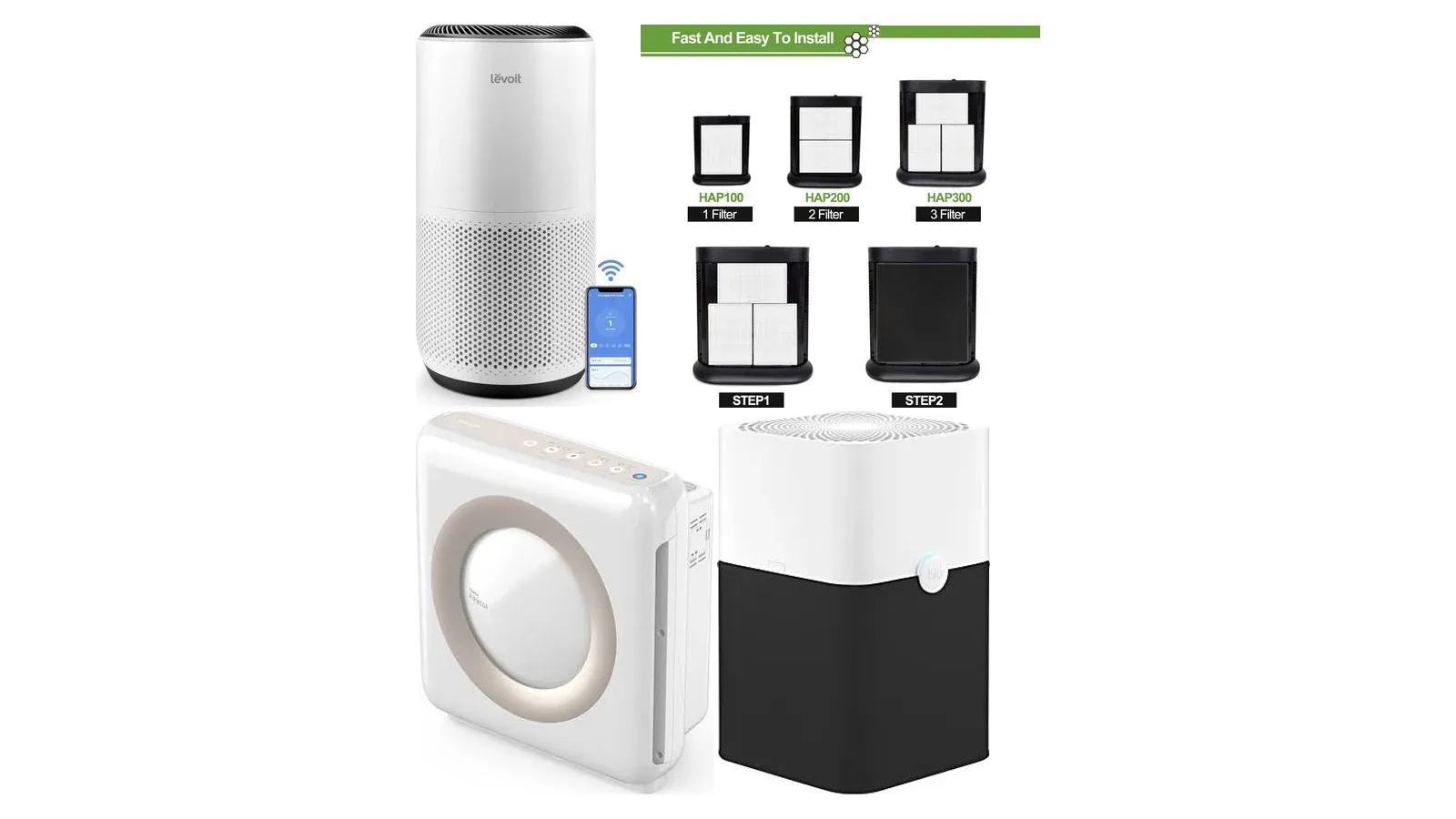
| Best Overall | Levoit Core 400S | Strong CADR, app control, quiet sleep mode for medium-large rooms |
| Best for Large Rooms | Honeywell HPA300 | High throughput for open layouts and severe seasonal allergies |
| Best Value Long-Term | Coway Airmega AP-1512HH | Auto mode and filter indicator keep running costs predictable |
| Best for Open Plans | Blueair Blue Pure 211+ | High airflow with washable pre-filter for dust-heavy homes |
| Best Budget | GermGuardian AC4825 | Entry HEPA for small bedrooms under $120 |
Product Recommendations
Levoit Core 400S — Best Overall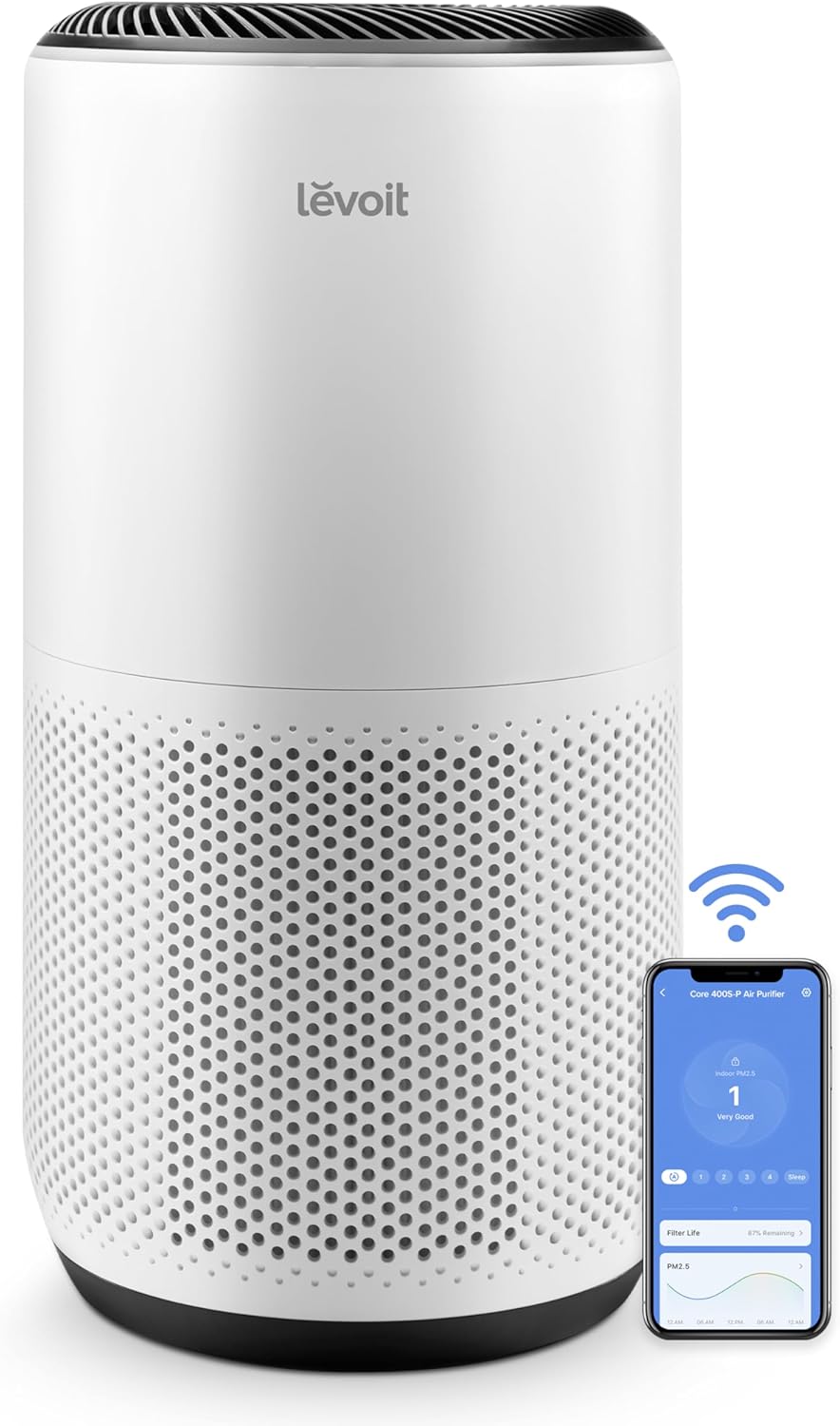

- True HEPA plus activated carbon for dust, dander, and light odors
- App and voice control; schedule lower fan speed during sleep hours
- CADR suitable for medium bedrooms and home offices
- Replacement filters cost more than budget units over three years
- Tall footprint may not fit under every window ledge
Honeywell HPA300 — Best for Large Rooms


- Among the highest CADR ratings in consumer HEPA class
- Four cleaning levels; turbo mode for post-cleaning dust spikes
- Proven platform with widely available HEPA replacement filters
- Louder on high settings—not ideal beside a light sleeper's pillow
- Bulky; needs floor space in corners, not tight alcoves
Coway Airmega AP-1512HH — Best Value Long-Term
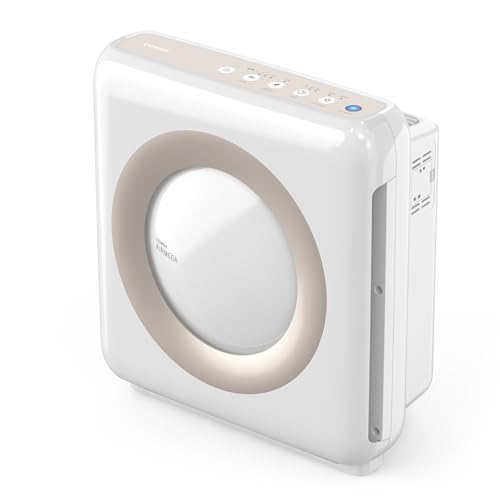
- Auto mode adjusts fan speed to particle levels—less guesswork
- Eco mode powers down when air stays clean for 30 minutes
- Compact footprint fits apartment bedrooms and guest rooms
- No app on base Mighty model—physical controls only
- Carbon pre-filter needs regular vacuuming in dusty homes
Blueair Blue Pure 211+ — Best for Open Plans
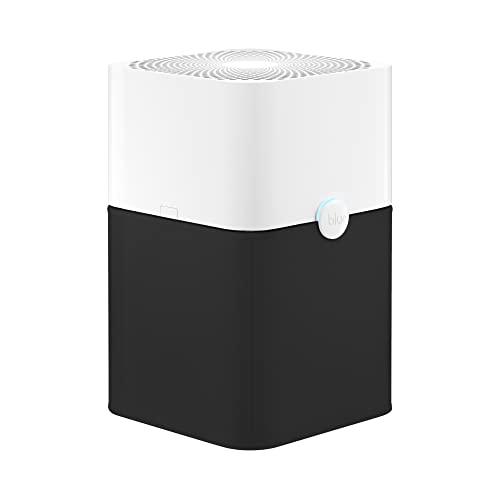
- HEPASilent tech moves high air volume at moderate noise
- Washable fabric pre-filter catches larger dust before HEPA
- Colorful pre-filter sleeves suit visible living-room placement
- Higher upfront cost than Coway or Levoit
- Replacement particle filters are proprietary—not generic HEPA
GermGuardian AC4825 — Best Budget
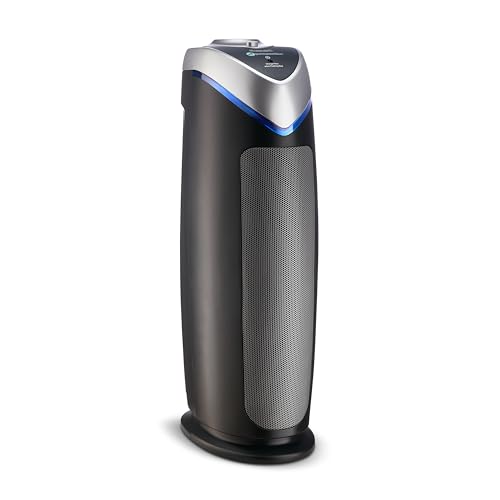
- True HEPA at the lowest price tier in this list
- UV-C section marketed for germ reduction (secondary to HEPA for allergens)
- Slim tower fits dorm rooms, nurseries, and home offices
- CADR limited to roughly 150 sq ft—undersized for master bedrooms
- UV bulb and filter add separate replacement schedules
Comparison Table
| Levoit 400S | Honeywell HPA300 | Coway Mighty | Blueair 211+ | GermGuardian AC4825 | |
|---|---|---|---|---|---|
| Room size | 300–700 sq ft | 450+ sq ft | 200–400 sq ft | 400–600 sq ft | Up to ~150 sq ft |
| True HEPA | Yes | Yes | Yes | Yes (HEPASilent) | Yes |
| Smart/app | Yes | No | No | No | No |
| Sleep noise | Low on auto | Moderate | Low on eco | Moderate | Low on low speed |
| Typical price | $200–$250 | $250–$300 | $180–$230 | $300–$350 | $80–$120 |
| Best for | Overall pick | Large rooms | Auto value | Open plans | Budget / small rooms |

How We Evaluated
Byline: HomeGlean Editorial Team · Indoor air & allergiesHomeGlean uses AI-assisted research to analyze public product information, user-review patterns, and scenario fit. Every article is reviewed by a human editor before publication. We do not conduct hands-on product testing unless explicitly stated.
For this guide we:
- Filtered for true HEPA or equivalent certified filtration—not ionizer-only units.
- Matched CADR and room size claims to typical bedroom and living-room footprints.
- Reviewed owner feedback themes on noise at night, filter cost, and allergy symptom relief.
- Price-checked Amazon listings on June 1, 2026; prices may change.

How to Choose
- Size the room first
- Under 180 sq ft → GermGuardian AC4825.
- 200–400 sq ft → Coway Mighty or Levoit Core 400S.
- 450+ sq ft or open plan → Honeywell HPA300 or Blueair 211+.
- Prioritize sleep noise
- Light sleepers → Levoit or Coway on low/auto overnight.
- Daytime-only use → Honeywell turbo acceptable.
- Factor filter cost
- Budget the HEPA replacement every 6–12 months—not just purchase price.
- Pair with source control
- HEPA helps airborne particles; encasements and vacuuming reduce what gets stirred up. See our bedroom dust guide.

Common Buying Mistakes
- Oversizing for a bedroom — A 400+ CADR unit beside the bed often runs at low speeds anyway; you pay in noise and filter cost without faster relief.
- Trusting "HEPA-type" marketing — If the listing does not say True HEPA, assume lower capture efficiency.
- Ignoring filter replacement math — A cheap unit with $45 filters twice a year can cost more than a quieter mid-tier model over two years.
- Blocking the intake — Tucking a unit under a nightstand or behind a chair can cut effective airflow by half.
When to Skip a New Purifier
Skip buying if humidity and mold are the main trigger—fix moisture with a dehumidifier for small spaces first. If dust mites drive symptoms, start with bedding barriers before adding hardware. Outdoor pollen peaks may respond to timed ventilation as well as filtration—see how to reduce bedroom dust.
What You'll Walk Away With
- A bedroom-sized short list with CADR matched to real sq ft—not marketing "whole home" claims
- Noise and filter-cost notes so the unit you buy is cheap to live with, not just cheap to ship
- Clear "skip buying" signals when humidity or bedding—not air—are the real triggers
FAQ
Do air purifiers really help with allergies?
HEPA filters capture airborne pollen, dust mite debris, and pet dander—they do not remove allergens trapped in mattresses or carpets. Many allergy sufferers report fewer nighttime symptoms when a correctly sized unit runs continuously in the bedroom. Results vary; this is not medical advice.
How long should I run an air purifier?
For allergies, run it continuously in the room where you spend the most time—especially overnight. Closing the door improves turnover. On clean-air days you can use eco or lower speeds, but sporadic use limits benefit.
HEPA vs "HEPA-type"—what is the difference?
True HEPA filters meet strict efficiency standards (99.97% at 0.3 microns). "HEPA-type" or "HEPA-like" filters may perform less consistently. For allergies, choose verified true HEPA models like those listed above.
Where should I place the purifier?
Put it where airflow is unobstructed—at least 12 in (30 cm) from walls and furniture. Beside the bed or opposite the door works well in bedrooms. Do not tuck it inside a closet or under a desk.
Can one purifier clean my whole apartment?
Consumer units are sized per room. Open doors help slightly, but one purifier rarely equalizes air across a multi-room apartment. Prioritize the bedroom first, then living areas.
Related Reading
- How to Choose an Air Purifier for Your Room Size
- Best Dehumidifiers for Small Spaces in 2026
- Air Purifier vs Dehumidifier: Which Do You Actually Need?
- Best Air Purifiers for Pet Hair and Dander in 2026
AI + Editor Transparency
We used AI tools to draft sections of this article and generate concept visuals where noted. Human editors verified HEPA specifications, CADR ranges, pricing, and internal links before publication. Recommendations reflect our editorial judgment, not manufacturer input.
For EU readers: This content was created with assistance from artificial intelligence and reviewed by human editors before publication.Affiliate Disclosure
HomeGlean is reader-supported. When you buy through links on our site, we may earn an affiliate commission at no extra cost to you. Learn more about how we test and recommend products.
Last updated: June 1, 2026 · Prices and availability may change.