
Musty smell or sneezing fit—both feel like "bad air," but they need different fixes. Air purifiers filter particles; dehumidifiers remove moisture. Buying the wrong one wastes money and leaves the root problem untouched. This comparison explains when each device wins, when you need both, and which models we recommend on each side.
Dek: Side-by-side decision guide for particle problems vs. humidity problems—with product picks for each camp.Quick Answer
Choose an air purifier if your main issues are pollen, pet dander, dust, or smoke—you notice symptoms indoors during allergy season or after vacuuming. Choose a dehumidifier if humidity stays above 55–60%, you see condensation on windows, smell mustiness, or find mold spots. Use both in damp, dusty basements or pet-friendly homes with seasonal allergies and summer humidity.Pain Point Bridge
Musty closet smell? You probably need moisture control. Sneezing on clean sheets? Particles, not humidity, are the lead suspect. Stacking both devices because an influencer owns them wastes money and sometimes makes things worse—humidifying a damp room feeds mold; purifying alone will not dry your bath.
This comparison is a decision tree, not a double shopping list: identify your primary symptom, pick the right tool, and know when you genuinely need both.
Who This Is For
- Musty closet or bath smells that will not vent away in 30 minutes
- Allergy sufferers who already wash bedding but still wake congested
- Buyers staring at two carts wondering which device to checkout first
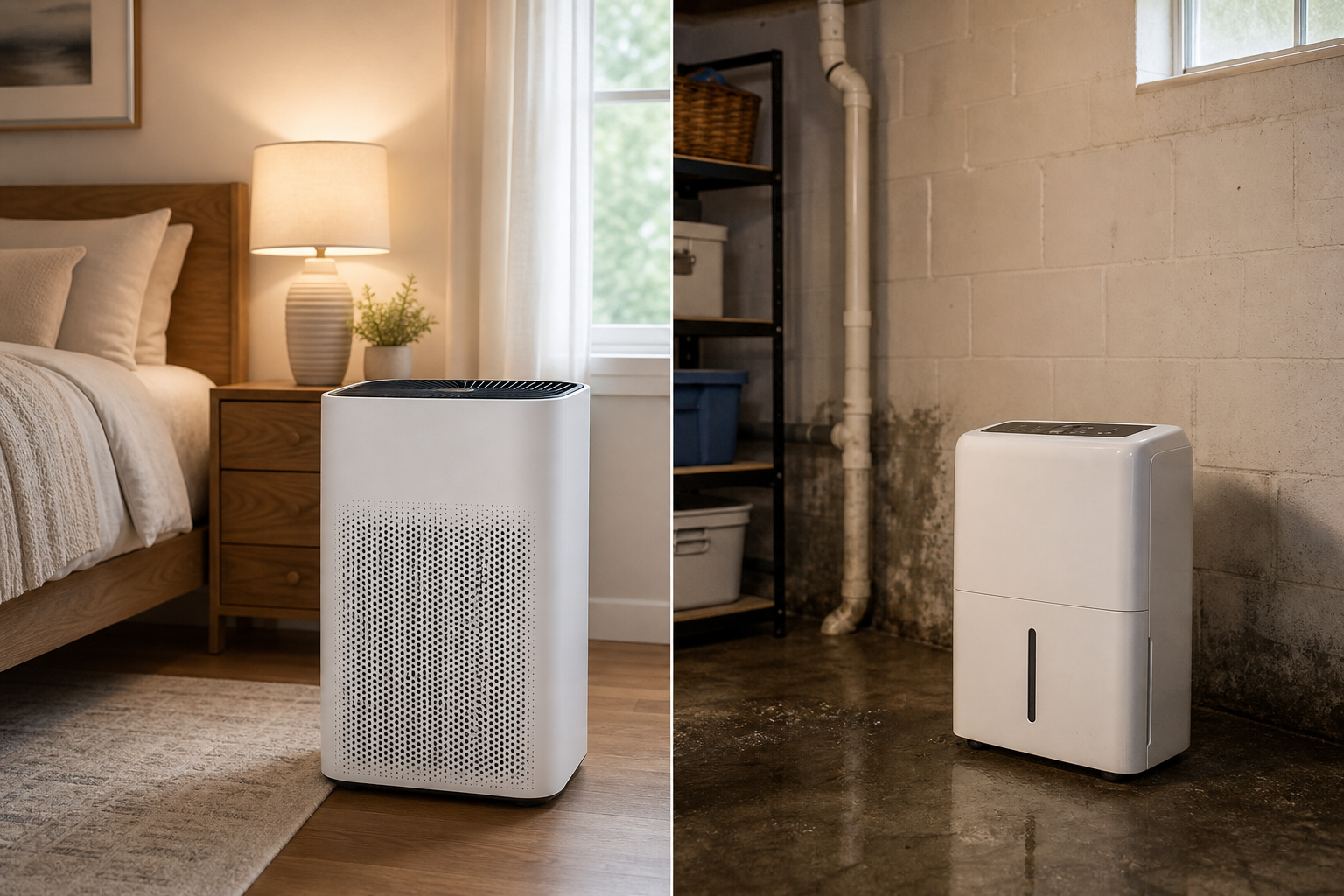
Side-by-Side Comparison
| Dimension | Air Purifier 🏆 | Dehumidifier 🏆 | Winner |
|---|---|---|---|
| Primary job | Captures airborne particles (pollen, dust, dander) | Lowers relative humidity | Tie (different jobs) |
| Best for allergies | 🏆 Reduces inhaled particle load | Indirect—dry air slows mite reproduction | Air purifier |
| Best for mold prevention | Captures spores only; does not stop growth | 🏆 Removes moisture mold needs | Dehumidifier |
| Musty odor | Helps if odor is particle-bound | 🏆 Addresses moisture source | Dehumidifier |
| Condensation on windows | No effect | 🏆 Lowers RH below dew point | Dehumidifier |
| Pet hair floating in sunbeams | 🏆 HEPA traps fine hair and dander | No effect on particles | Air purifier |
| Typical room | Bedroom, living room | Basement, bath, laundry | Tie |
| Ongoing cost | HEPA filter replacements | Electricity + empty tank or drain | Tie |
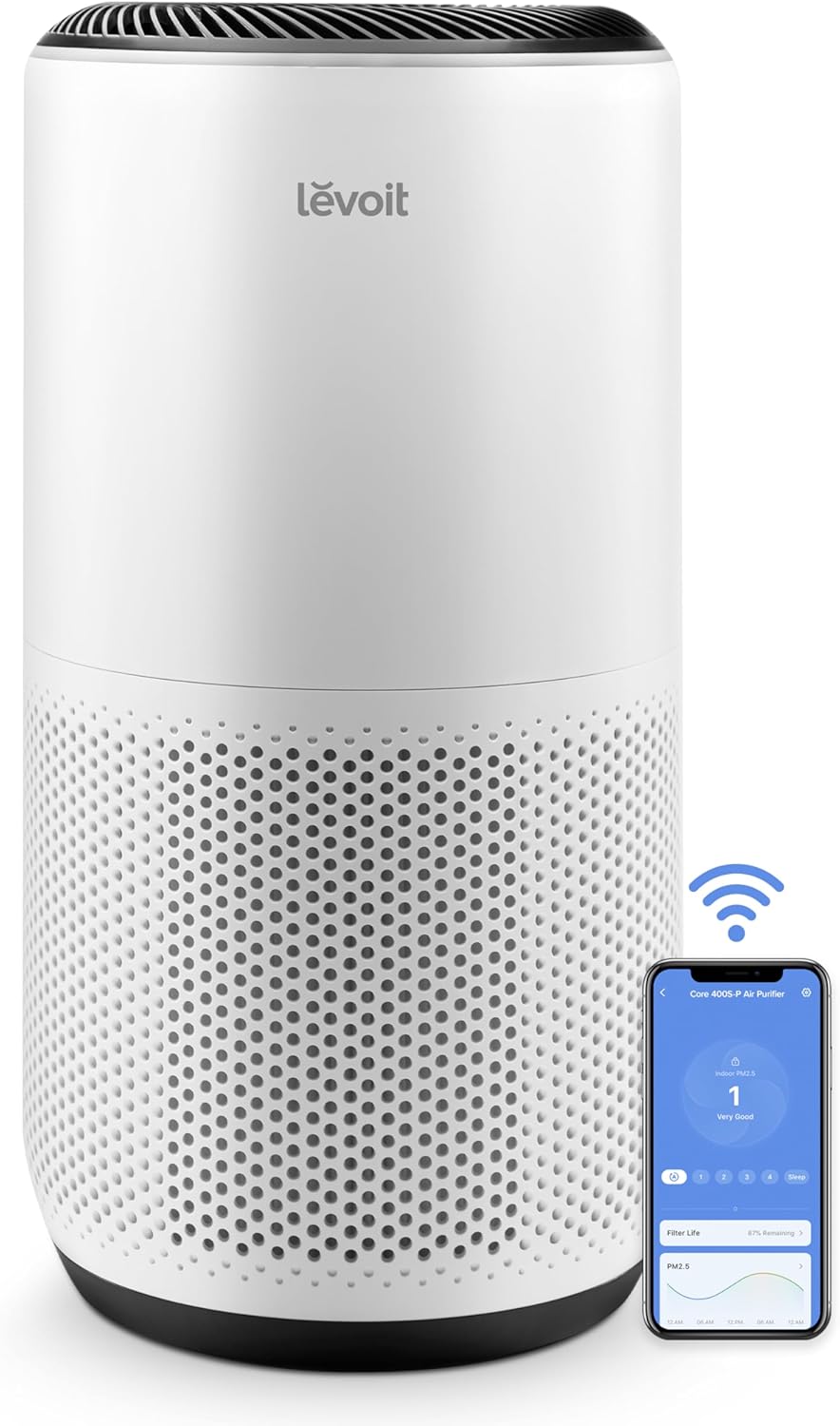
Choose an Air Purifier If
- If you wake congested during pollen season but humidity feels normal—particles, not moisture, are likely driving symptoms.
- If you have pets and visible dander when sunlight hits the living room—HEPA filtration targets airborne allergens.
- If you live near wildfire smoke or urban pollution—purifiers with true HEPA and carbon reduce particulate load.
- If you already control humidity below 50% but still sneeze indoors—a purifier adds the missing layer.

See our full roundup: Best Air Purifiers for Allergies in 2026.
Choose a Dehumidifier If
- If you smell mustiness within hours of closing windows—excess moisture is the likely cause.
- If you see mold on bathroom grout, basement corners, or closet walls—lower humidity before scrubbing or spores return.
- If you dry laundry indoors and windows fog up—active moisture removal beats wiping glass daily.
- If you track humidity above 60% on a hygrometer consistently—a dehumidifier is the direct fix.

See our full roundup: Best Dehumidifiers for Small Spaces in 2026.
Cost, Maintenance & Risk
Cost (Year 1 estimate, single room)
| Air Purifier | Dehumidifier | |
|---|---|---|
| Purchase | $180–$250 | $150–$300 |
| Consumables / energy | $40–$80 filters | $30–$80 electricity |
| Year 1 total | ~$220–$330 | ~$180–$380 |
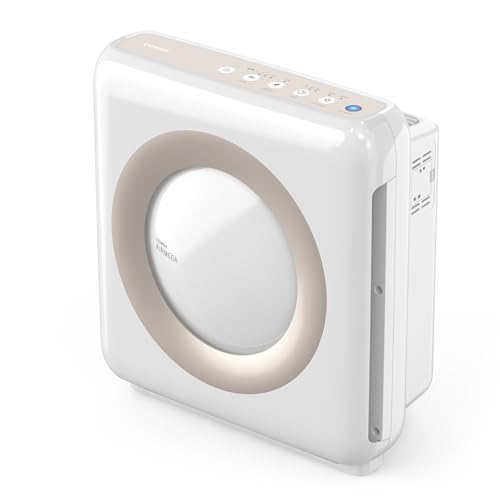
- Purifier: Replace HEPA every 6–12 months; vacuum pre-filter monthly in dusty homes.
- Dehumidifier: Empty tank or maintain drain line; clean coil and filter seasonally to prevent mold inside the unit.
Risk of choosing wrong
- Purifier when you need dehumidifier: Mold keeps growing; musty smell returns; wasted spend on filters.
- Dehumidifier when you need purifier: Air feels dry but you still inhale pollen and dander; allergy symptoms unchanged.
When to Use Both
Basements used as home offices, pet-friendly homes in humid climates, and allergy sufferers in older buildings with poor ventilation often benefit from dehumidifier + HEPA purifier in the same zone. Run the dehumidifier to hold RH at 45–50%, then let the purifier handle particles stirred by pets, boxes, and foot traffic.
Place units at least 3 ft (1 m) apart so airflow paths do not conflict. Prioritize purchase order: fix moisture first if mold is visible; add purifier second for comfort.
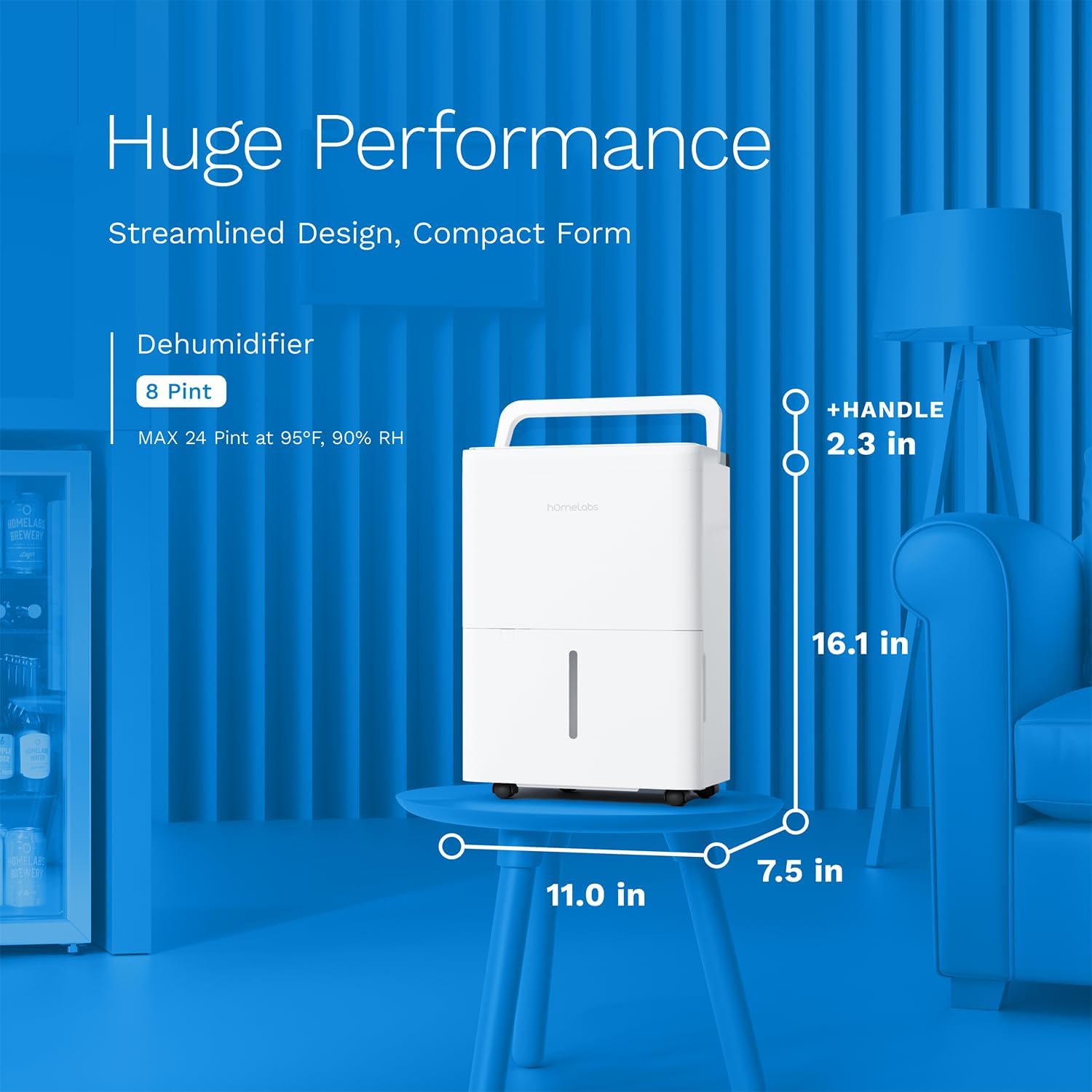
How We Evaluated
- Matched each recommendation to scenario fit (room size, renter constraints, pet/kid realities)—not spec-sheet winners alone.
- Cross-checked public retailer listings and owner-review themes for recurring complaints (noise, odor, assembly, wash durability).
- Price-checked U.S. listings at time of update; we do not guarantee lowest available price.
- Human editors reviewed AI-assisted drafts; we did not conduct hands-on lab testing unless explicitly stated in the article.
Common Mistakes
- Running a humidifier in a musty closet — feeds mold; dehumidify first.
- Purifier beside an open window — pulls outdoor pollen in faster.
- Chasing one device for VOC off-gassing — ventilation beats filters for fresh paint weeks.
When You Need Both
Dry, sealed winter bedrooms with allergies often need paired guidance. Damp basements need sizing help before any purifier purchase.
What You'll Walk Away With
- A symptom → device map (particles vs. moisture vs. both)
- Placement mistakes that make two good devices fight each other
- Picks for each camp if you are ready to buy today
FAQ
Does a dehumidifier clean the air?
It improves air quality indirectly by reducing humidity that supports mold and dust mites. It does not filter pollen, smoke, or pet dander. For particles, you need HEPA filtration.
Will an air purifier remove humidity?
No. Purifiers circulate and filter air—they are not condensing moisture. Some ionizer models claim "dryness" effects; they are not substitutes for dehumidifiers.
Which is better for dust mites?
Both help differently. Dehumidifiers below 50% RH slow mite reproduction; encasements and HEPA vacuuming address reservoirs. Air purifiers reduce airborne mite debris you inhale.
Can I run both in a bedroom?
Yes, if the room is large enough and humidity warrants it. In a standard bedroom with normal RH, a purifier alone is usually sufficient. Add a dehumidifier only if RH exceeds 55% measured overnight.
Do I need either in winter?
Heated winter air is often dry—dehumidifiers may be unnecessary unless you shower without exhaust fans. Purifiers still help with indoor allergens when windows stay closed.
Related Reading
- How to Reduce Bedroom Dust: A Room-by-Room Action Plan
- How to Choose an Air Purifier for Your Room Size (CADR Math)
- Best Air Purifiers for Pet Hair and Dander in Open-Plan Homes
AI + Editor Transparency
We used AI tools to draft sections of this article and generate concept visuals where noted. Human editors verified humidity and filtration science summaries, product fit, pricing, and internal links before publication.
For EU readers: This content was created with assistance from artificial intelligence and reviewed by human editors before publication.Affiliate Disclosure
HomeGlean is reader-supported. When you buy through links on our site, we may earn an affiliate commission at no extra cost to you. We may earn commissions from both products featured in this comparison. Learn more about how we test and recommend products.
Last updated: June 1, 2026 · Prices and availability may change.