
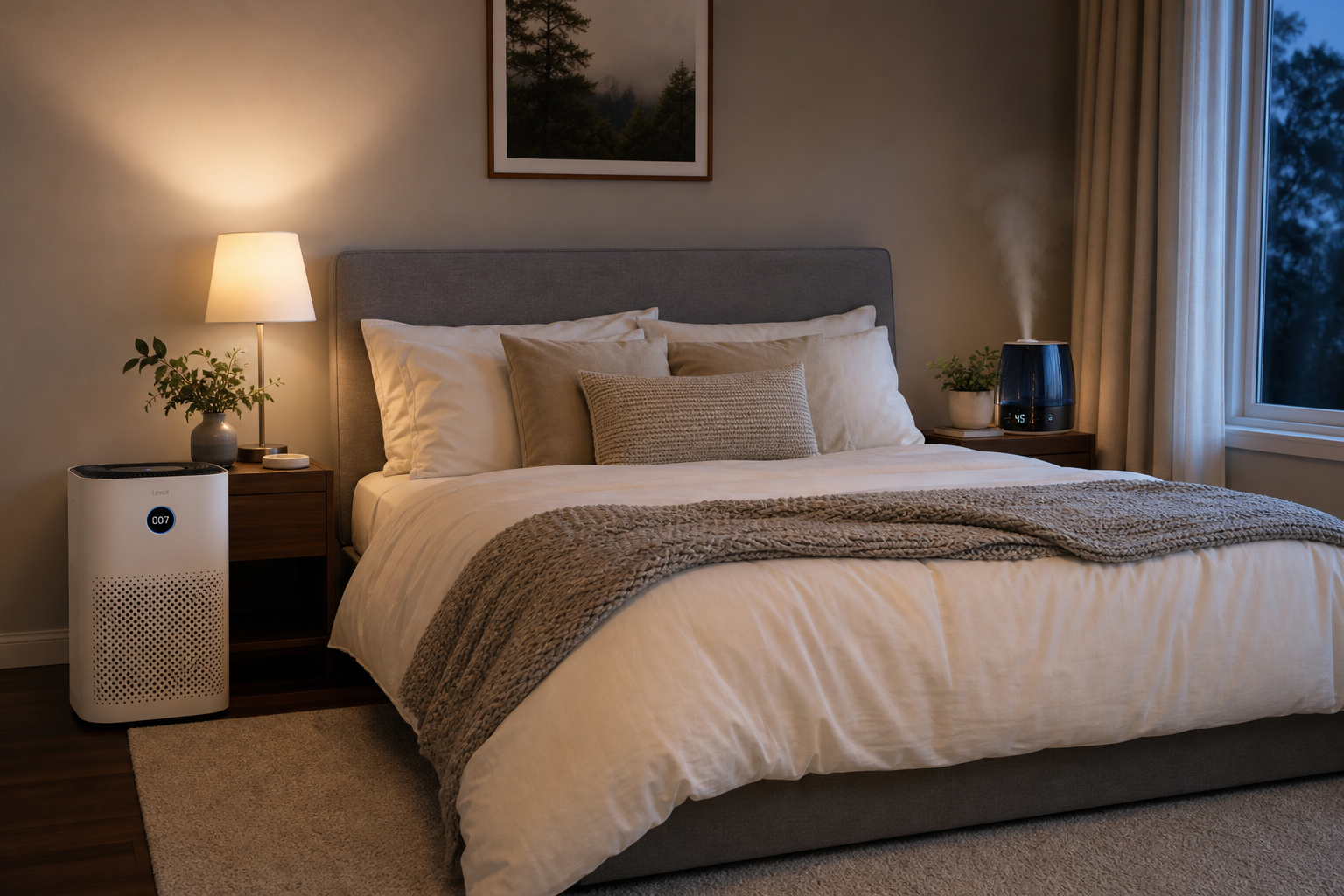
Winter bedrooms often need cleaner air and moister air at the same time—closed windows trap particles while heating dries the room to 25% RH. Purifiers and humidifiers solve different problems, and yes, you can run both—if you place them correctly and monitor humidity so you do not trade dry sinuses for dust mite growth. This guide explains when each device wins, when to combine them, and which models we recommend.
Dek: Quick answer: yes, if you separate jobs—HEPA for particles, humidifier for dry air—and avoid placing them in each other's airflow.Quick Answer
Use an air purifier when allergies, pets, smoke, or outdoor pollution drive symptoms—you need HEPA to capture particles. Use a humidifier when indoor RH stays below 30–35% in heated months—you need moisture for comfort and to keep mucous membranes from drying out. Use both in dry, sealed winter bedrooms if you have allergies and dryness—target 40–50% RH, place units 3+ ft apart, and clean the humidifier weekly. Choose a combo unit (Dyson PH01 class) only if you want one tower and accept higher filter cost.Pain Point Bridge
Dry winter air cracks your sinuses; pollen season makes you want to seal the windows. Running a humidifier and a purifier in the same small bedroom sounds smart until mist hits the HEPA intake or RH climbs past mite-friendly territory. The question is not "can you"—it is where and when.
We lay out placement, humidity targets, and the maintenance habits that keep both devices helping instead of fighting.
Who This Is For
- Dry winter + allergy bedrooms considering two devices
- Mist-aiming humidifier owners whose HEPA intake got wet
- Small-room stackers who need placement rules, not more SKUs
Side-by-Side Comparison
| Dimension | Air Purifier 🏆 | Humidifier 🏆 | Winner |
|---|---|---|---|
| Primary job | Filters particles (dust, dander, pollen) | Adds water vapor to air | Tie |
| Dry winter sinuses | No effect on humidity | 🏆 Raises RH | Humidifier |
| Pet dander / pollen | 🏆 HEPA captures airborne allergens | No particle filtration | Air purifier |
| Dust mite risk | Indirect (filters mite debris) | 🏆 Risk if RH > 50% | Context-dependent |
| Mold risk | No moisture added | 🏆 Risk if over-humidified or dirty tank | Air purifier (safer if neglected) |
| Closed-window season | 🏆 Essential for particle buildup | 🏆 Essential for dryness | Both often needed |
| Maintenance | HEPA filter replacement | Daily/weekly tank cleaning | Tie |
| Noise at night | Fan white noise | Ultrasonic hum or evaporative fan | Tie (model-dependent) |
Choose an Air Purifier If
- If you wake congested from dust or pollen with normal humidity—particles are the likely trigger.
- If you have pets sleeping in or near the bedroom—dander stays airborne hours after grooming.
- If you smell smoke or outdoor pollution with windows closed—HEPA + carbon helps particle load.
- If you already humidify adequately (40%+ RH) but symptoms persist—filtration is the missing layer.
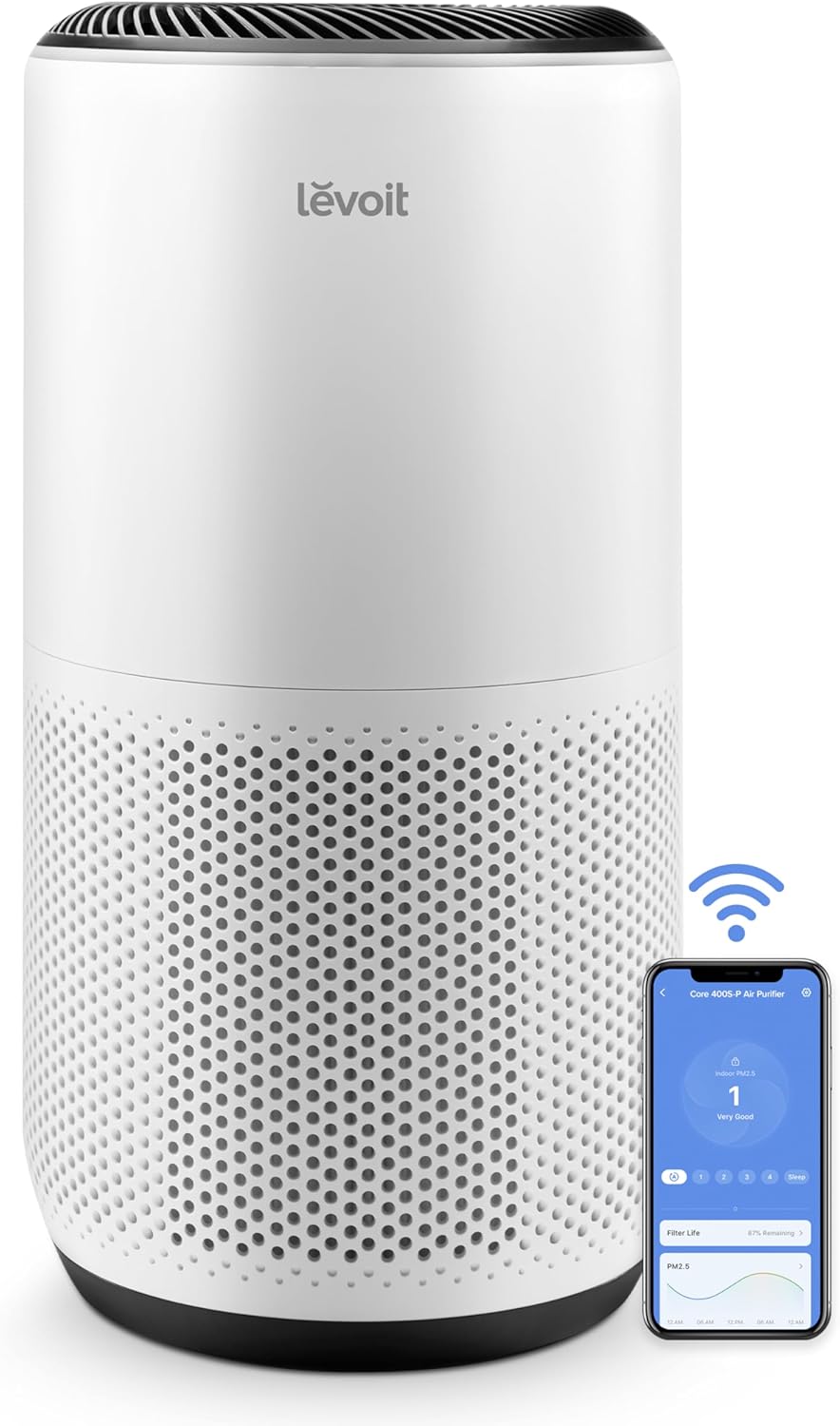
Recommended: Levoit Core 400S
Pros: True HEPA + carbon; quiet sleep mode; sized for typical bedrooms. Cons: Does not add moisture; filter replacements ongoing. Price: $200–$250 · Price checked: June 1, 2026 Check LEVOIT Air Purifiers for Home Large Room Price on AmazonFull roundup: Best Air Purifiers for Allergies in 2026
Choose a Humidifier If
- If you wake with nosebleeds, cracked lips, or static shocks in winter—RH is likely too low.
- If you track humidity below 30% on a hygrometer with heat running daily.
- If you use CPAP or heated blankets that further dry airway tissues overnight.
- If you have no allergy particle issues—just dryness—a humidifier alone may suffice.
Recommended: LEVOIT Classic 300S
Pros: Top-fill cleaning; warm/cool mist; app RH targeting. Cons: Weekly cleaning required; white dust with hard water. Price: $50–$70 · Price checked: June 1, 2026 Check Amazon Basics Double-Tipped Cotton Swabs Price on AmazonFull roundup: Best Humidifiers for Dry Bedrooms in Winter
When to Use Both (Same Room)
Yes—you can run both when winter heating dries air below 35% RH and you have ongoing particle triggers (pets, dust, city pollution). Follow these rules:- Target 40–50% RH — Above 50% aids dust mites; below 30% keeps irritants airborne longer.
- Place 3 ft (1 m) apart — Purifier intake should not suck humidifier mist directly into the filter (can shorten carbon life and confuse sensors).
- Clean humidifier weekly — Bacteria in tanks beats any purifier benefit.
- Run purifier continuously; humidifier on auto — Avoid max mist all night unless RH confirms need.
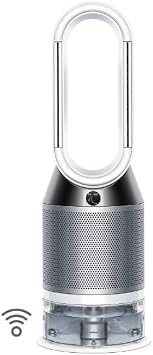
Choose combo if nightstand space is zero and budget allows. Separate units offer flexibility and lower replace cost long-term.
Cost, Maintenance & Risk
Year 1 estimate (single bedroom)
| Purifier only | Humidifier only | Both separate | |
|---|---|---|---|
| Purchase | $200–$250 | $50–$70 | $250–$320 |
| Consumables | $40–$80 filters | $10–$30 descaling/distilled | $50–$110 |
| Electricity | Low | Low–moderate | Moderate |

- Purifier: Replace HEPA every 6–12 months; vacuum pre-filter monthly.
- Humidifier: Empty daily; descale weekly; replace wicks on evaporative models.
Risk of getting it wrong
- Humidifier only with allergies — Dryness improves but dander remains airborne.
- Purifier only in 20% RH — Particles filtered but airways stay irritated from dryness.
- Both without hygrometer — Over-humidification grows mites and mold on windowsills.

How We Evaluated
- Matched each recommendation to scenario fit (room size, renter constraints, pet/kid realities)—not spec-sheet winners alone.
- Cross-checked public retailer listings and owner-review themes for recurring complaints (noise, odor, assembly, wash durability).
- Price-checked U.S. listings at time of update; we do not guarantee lowest available price.
- Human editors reviewed AI-assisted drafts; we did not conduct hands-on lab testing unless explicitly stated in the article.
Common Mistakes
- Humidifier mist aimed at the purifier intake — wets filters and kills CADR.
- Chasing 60% RH in winter — 40–50% is enough; higher invites mites.
- Never cleaning the humidifier tank — bacteria beats any HEPA downstream.
When One Device Is Enough
Outdoor pollen only? Sized purifier alone. Shower-only humidity spikes? Fan and squeegee, not hardware.
What You'll Walk Away With
- Placement rules so mist does not wet HEPA media
- Humidity caps and tank hygiene that protect air quality
- When one device is enough for your symptom set
FAQ
Will a purifier remove humidity?
HEPA purifiers do not intentionally dehumidify air meaningfully. Some airflow may slightly affect perceived dryness, but they are not substitutes for humidifiers in arid winter conditions.
Can humidifier mist clog a HEPA filter?
Direct mist into the purifier intake can dampen filters and reduce carbon effectiveness. Keep units separated and point mist away from purifier intakes.
Which do I buy first?
If RH is below 30%, humidifier first for comfort. If RH is normal but allergy symptoms dominate, purifier first. Many winter bedrooms eventually need both.
Are combo units worth it?
Convenience yes; cost per year higher than mid-tier separate devices. Renewed Dyson PH01 makes sense if space and aesthetics matter.
Does summer change the answer?
Humidifiers often idle in summer; purifiers still help with pollen and AC-recirculated dust. Reassess RH seasonally.
What about dehumidifiers instead?
If RH exceeds 55–60%, you need moisture removal, not addition. See air purifier vs dehumidifier for damp climates.
Related Reading
- Best Air Purifiers for Allergies in 2026
- Best Humidifiers for Dry Bedrooms in Winter
- How to Reduce Dust in Your Bedroom: A Complete Guide
- Air Purifier vs Dehumidifier: Which Do You Actually Need?
- How to Choose an Air Purifier for Your Room Size (CADR Math)
- Best Air Purifiers for Pet Hair and Dander in Open-Plan Homes
AI + Editor Transparency
We used AI tools to draft sections of this article and generate concept visuals where noted. Human editors verified humidity and filtration guidance, product fit, pricing, and internal links before publication.
For EU readers: This content was created with assistance from artificial intelligence and reviewed by human editors before publication.Affiliate Disclosure
HomeGlean is reader-supported. When you buy through links on our site, we may earn an affiliate commission at no extra cost to you. We may earn commissions from both products featured in this comparison. Learn more about how we test and recommend products.
Last updated: June 1, 2026 · Prices and availability may change.