
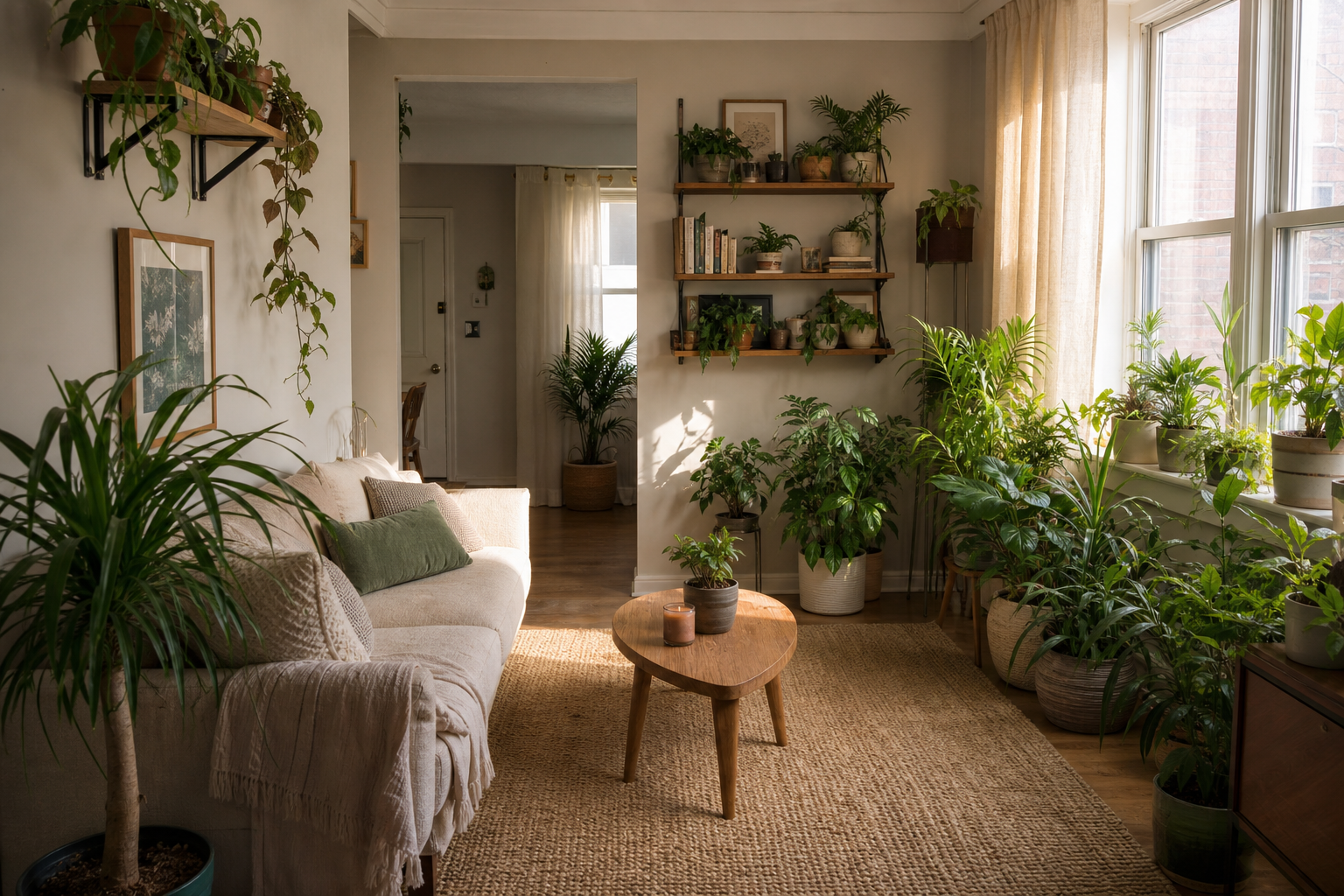
Quick Answer
Maximize one window view, add two live plants at different heights, swap one synthetic textile for natural fiber, and use linen-look curtains to soften daylight. That four-move stack delivers most of the calm people associate with biophilic spaces. Total starter cost: roughly $60–$150.Pain Point Bridge
Apartment living often means fluorescent hallways, vinyl floors, and windows that face a brick wall. Biophilic design is not about owning a forest view—it is about signal density: enough natural cues that your nervous system registers "outside is nearby."
The good news: plants, jute rugs, ceramic pots, and linen curtains are all move-out friendly. You are building a kit, not a renovation.
Who This Is For
- Brick-wall window views craving “outside nearby” signals
- Plant-curious renters who will not install living walls
- Budget biophilic shoppers avoiding fake-plant motel vibes
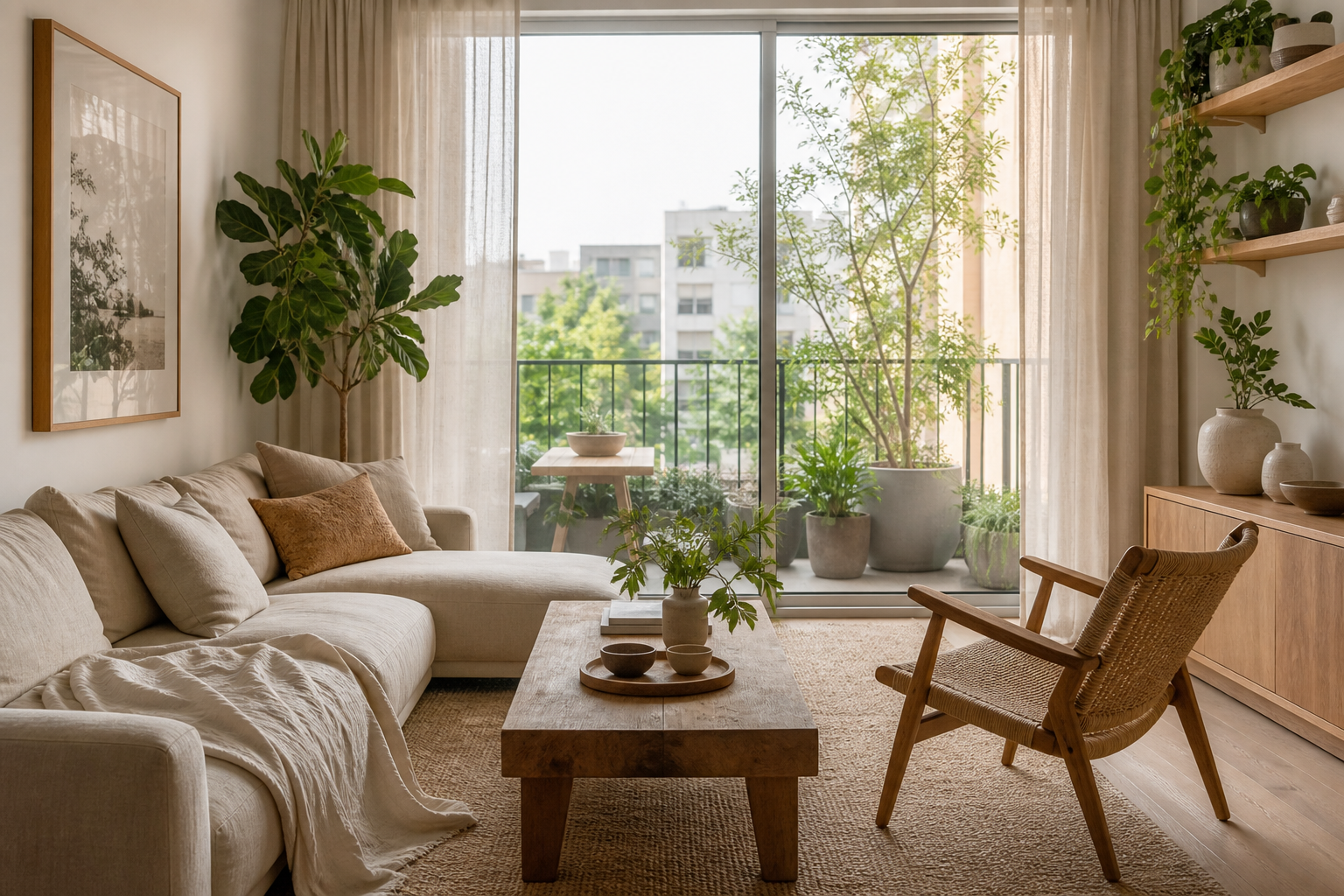
Key Criteria
Living elements (not just fake green)
Real plants change air feel and require care rhythms that connect you to the space. One live plant beats five plastic ones.
Common range: 1 floor plant + 1 shelf or hanging plant for studios. If you're unsure, choose: A snake plant or pothos for low light—see our low-light plant guide. Common mistake: Buying sun-loving plants for a north window—they brown, you quit biophilic design entirely.Natural materials
Wood, clay, jute, linen, and wool read organic; glossy plastic reads synthetic.
Common range: One natural-fiber rug OR one linen curtain set per room—not both required day one. If you're unsure, choose: A jute or jute-blend rug under 8×10 ft (~2.4×3 m) in living zones.Daylight access
Biophilic spaces prioritize views and light quality, not just brightness.
Common range: Sheer or linen-look panels that filter—not block—daylight. If you're unsure, choose: Light-filtering curtains on rods mounted high and wide.Pet and kid safety
Natural design fails if toxic plants sit at pet height.
Common range: Elevated shelves, hanging planters, or ASPCA-verified safe species. If you're unsure, choose: Parlor palm or spider plant in hanging planters—see pet-safe plants.Step-by-Step Framework
Step 1: Clear the window zone
Move furniture that blocks glass. Biophilic design starts with what you can see from the sofa.
Success check: Sitting on your main seat, you see window glass or sky—not just a curtain edge.Step 2: Place plants at two heights
One floor or large console plant + one elevated trailing or medium plant creates vertical nature—mimicking outdoor layering.
Success check: Eye travels from floor to mid-height without a single "plant line." Recommended: Costa Farms Live Plants · Price checked: June 1, 2026Step 3: Add one natural-fiber anchor
A jute or jute-blend rug defines the living zone and replaces cold floor visuals.
Success check: Bare feet or socks register texture difference vs. laminate or carpet. Recommended: CASAVANI Natural Jute Area Rug · Price checked: June 1, 2026Step 4: Upgrade planters—not just plastic nursery pots
Ceramic or matte planters signal intentional design. Repot after 2–4 weeks of acclimation.
Success check: Plants look styled, not like a garden center loading dock. Recommended: DECORLIFE Ceramic Planters · Price checked: June 1, 2026Step 5: Soften daylight with linen-look curtains
Filter harsh midday sun; keep evening privacy without cave-dark rooms.
Success check: Daytime photos show diffused light, not blown-out window rectangles. Recommended: H.VERSAILTEX Linen Curtains · Price checked: June 1, 2026Common Mistakes
Turning the apartment into a greenhouse- Why it fails: Overcrowded plants compete for light and create maintenance guilt.
- Instead: Cap at one plant per 100 sq ft (~9.3 m²) until care feels automatic.
- Why it fails: Natural fibers stain; dining areas need washable rugs.
- Instead: Jute in living or bedroom; washable flat-weave under dining tables.
- Why it fails: Biophilic design requires light access, not just green objects.
- Instead: Low profile furniture flanking the window, tall plants to the side.
- Why it fails: Emergency vet bills destroy the calm you built.
- Instead: Cross-check ASPCA toxic plant list before purchase.
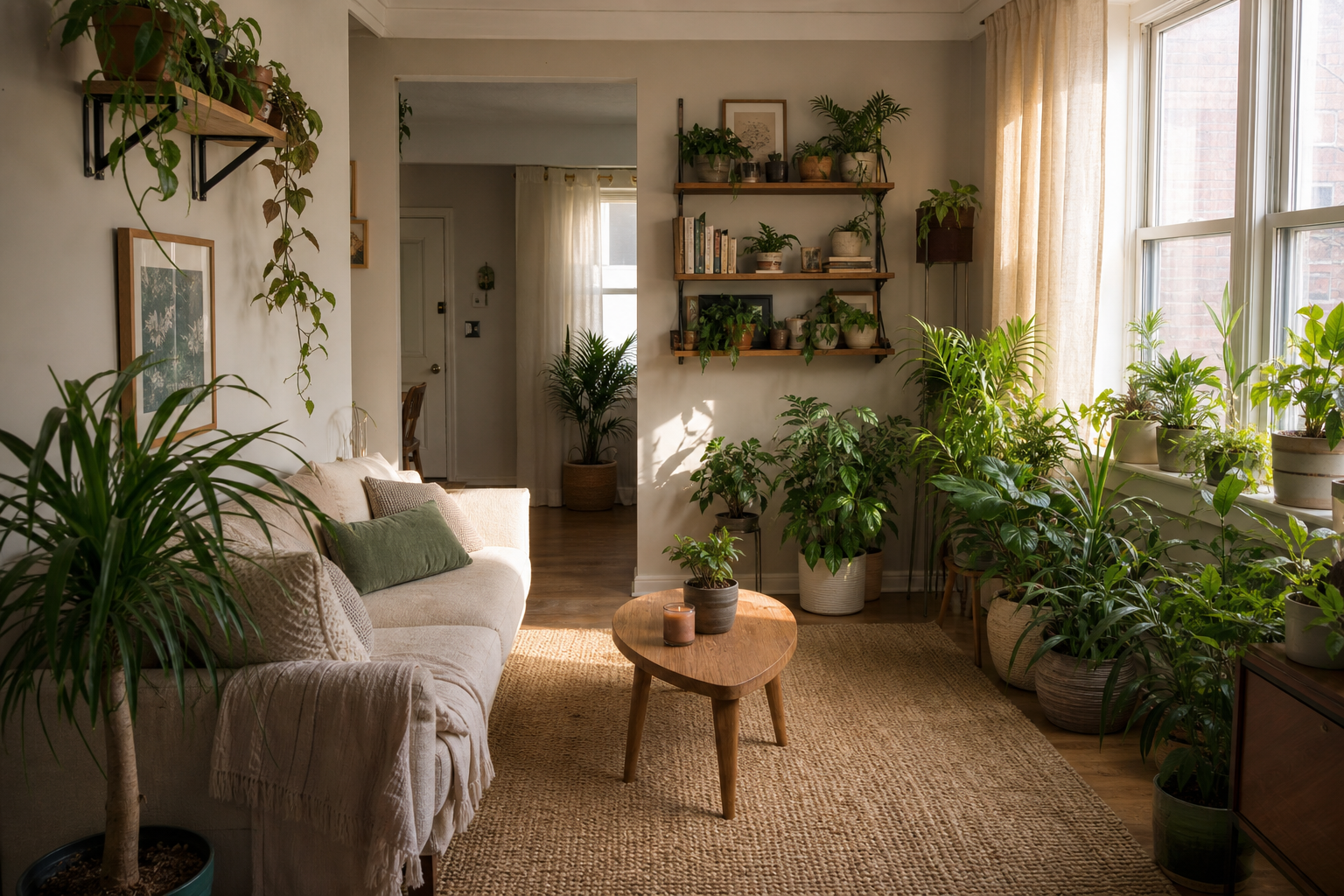
Recommended Product Types
| Layer | Product example | Price | Learn more |
|---|---|---|---|
| Living plants | Costa Farms nursery stock | $10–$40 | Low-light plants for beginners |
| Natural fiber rug | CASAVANI jute rug | $30–$80 | — |
| Ceramic planters | DECORLIFE set | $20–$50 | Plant shelf styling |
| Light-filtering curtains | H.VERSAILTEX linen-look | $15–$30/panel | Budget curtains guide |
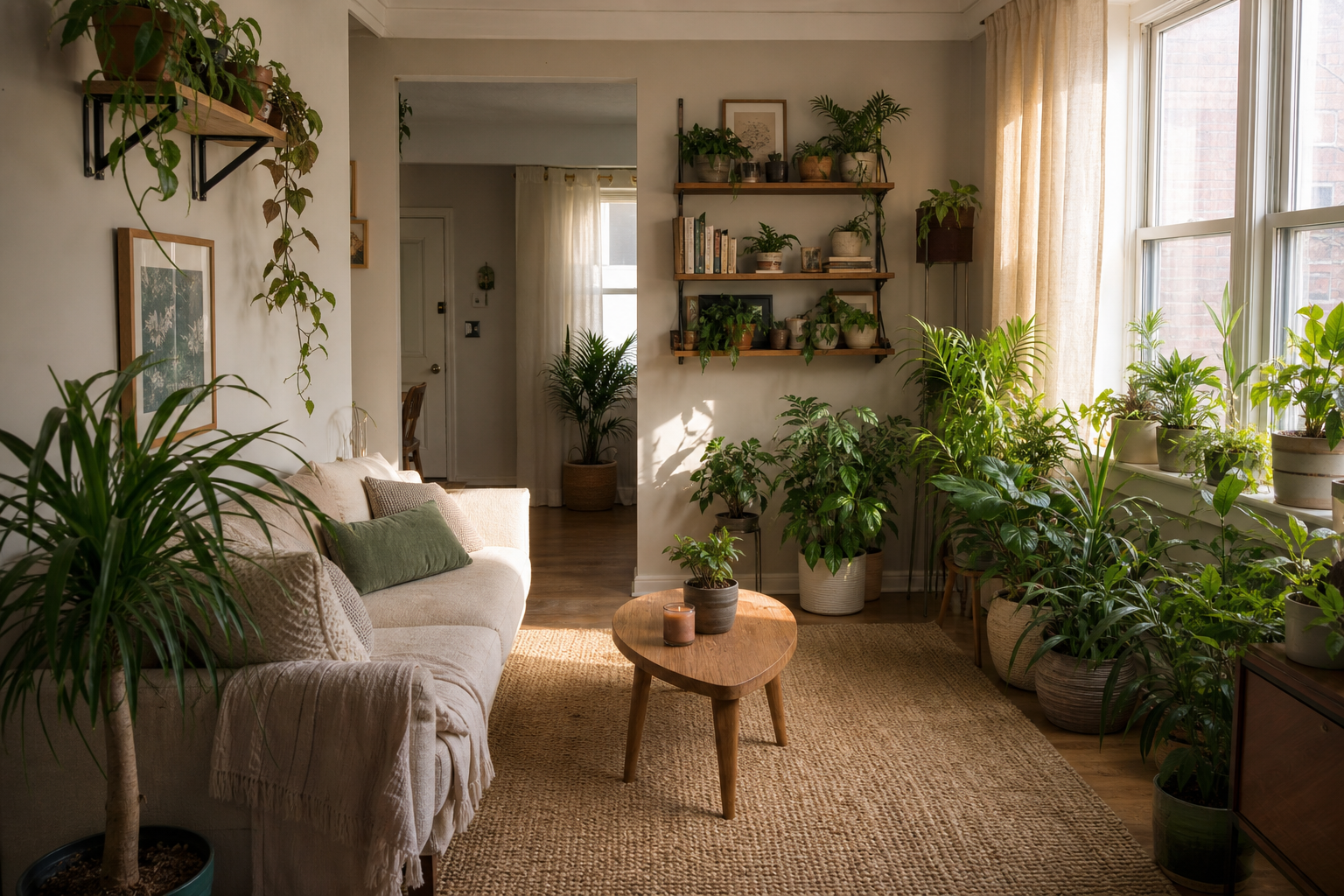
Budget Tiers
| Tier | Spend | What you get |
|---|---|---|
| Starter ~$40 | One plant + one planter | Living element only |
| Core ~$100 | Above + jute rug OR curtains | Material + light upgrade |
| Full ~$150 | All four layers | Complete biophilic living zone |
How We Evaluated
- Matched each recommendation to scenario fit (room size, renter constraints, pet/kid realities)—not spec-sheet winners alone.
- Cross-checked public retailer listings and owner-review themes for recurring complaints (noise, odor, assembly, wash durability).
- Price-checked U.S. listings at time of update; we do not guarantee lowest available price.
- Human editors reviewed AI-assisted drafts; we did not conduct hands-on lab testing unless explicitly stated in the article.
What You'll Walk Away With
- A four-move stack (~$60–$150) for calm without renovation
- Real plants vs. fake-green signal density guidance
- Pet-safe plant links when biophilic meets curious cats
FAQ
Do plants actually improve indoor air quality?
Plants provide psychological and aesthetic benefits reliably. Measurable air purification at room scale usually requires many more plants than a typical apartment holds—do not skip an air purifier if allergies are your primary concern. See our air purifier guide for that use case.
Is biophilic design the same as cottagecore?
Overlap exists, but biophilic design is broader—it includes modern apartments with minimal plants and strong daylight, not just floral vintage aesthetics.
Can I do biophilic design with fake plants?
High-quality faux plants work for dark corners where live plants fail—but mix at least one live plant to maintain care rhythm and authenticity.
What if I kill every plant I buy?
Start with snake plant or ZZ plant, use pots with drainage, and read our self-watering planter guide if travel is the issue.
Are jute rugs scratchy?
Some are—look for jute-cotton blends or add a thin rug pad. Test barefoot before committing in a bedroom.
Related Reading
- Best Non-Toxic Indoor Plants Safe for Cats and Dogs
- How to Create a Plant Shelf That Actually Looks Good
- Best Low-Light Indoor Plants for Beginners
- Top Home Decor Trends for 2026 That Actually Work
AI + Editor Transparency
We used AI tools to draft sections of this article and generate concept visuals where noted. Human editors verified biophilic design principles, plant safety references, pricing, and internal links before publication. Recommendations reflect our editorial judgment, not manufacturer input.
For EU readers: This content was created with assistance from artificial intelligence and reviewed by human editors before publication.Affiliate Disclosure
HomeGlean is reader-supported. When you buy through links on our site, we may earn an affiliate commission at no extra cost to you. Learn more about how we test and recommend products.
Last updated: June 1, 2026 · Prices and availability may change.